About 357 minutes
Wild west — Background and Themes
Young Readers Enchanted Adventures
81,930 recorded words. 12 minutes difference from this book's estimate.
View Gutenberg source #68084
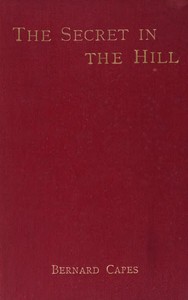
The catalog record for The secret in the hill — Context and Discussion provides practical reading context through 79,338 words, 5 hr 45 min estimated reading time, and 7 detected text sections.
The text analysis averages about 15.9 words per sentence, while the detected sections provide another way to judge how the source is divided.
Project Gutenberg metadata also associates the work with “Orphans -- Fiction,” connecting these edition facts with the source record’s subject description.
Explore this collection
These alternatives are selected using recorded categories and estimated reading time.
About 357 minutes
Young Readers Enchanted Adventures
81,930 recorded words. 12 minutes difference from this book's estimate.
View Gutenberg source #68084About 331 minutes
Young Readers Enchanted Adventures
76,099 recorded words. 14 minutes difference from this book's estimate.
View Gutenberg source #60365About 366 minutes
Young Readers Enchanted Adventures
84,161 recorded words. 21 minutes difference from this book's estimate.
View Gutenberg source #64534Search stored excerpts and compare books → Choose by your preferences →
Choices use stored catalog measurements. Estimates vary with reading speed. A shared category is a catalog label, not a claim that two books have the same argument or literary quality.
Search reads excerpt text stored with this catalog and links to its associated Gutenberg record. The connection is stored in the site database; this tool does not recheck that every excerpt is word-for-word identical to that external record. Excerpt search does not cover every chapter and does not verify historical publication dates.
Catalog snapshot checked: 2026-09-25. Coverage: 92 public books, 92 available source excerpts.
Read the complete public-domain text at its original source.
Read on Project GutenbergBernard Capes's The Secret in the Hill (1903) opens with a first-person narrator recalling his mother's death and his father, a barrister who takes him on circuit. The boy's early observations of the legal world—where judges and barristers are likened to a "strolling company of actors"—establish a voice that is both childlike and shrewd. The catalog subjects list orphans, uncles, treasure troves, and a murder trial, but the excerpts show that the novel's texture is as much about domestic and natural detail as about crime. The hill itself, introduced in Chapter IV, becomes a focal point for both literal excavation and psychological tension.
The narrator's early life is filtered through a child's logic: he decides that Mr. Quayle, Q.C., is so called because his bald head and chin tuft form the letter Q, and his ruff makes a Q/C. This playful etymology is typical of the book's voice—precise yet naive. The boy overhears tales told by barristers who "put off gravity with the horsehair they wore all day," and he categorizes them by physical type: lean and quarrelsome, rosy and laughter-making, heavy-browed and sulky. These observations are not mere color; they train the reader to attend to character through external detail, a method that later applies to the mysterious figures of Uncle Jenico and Harry Harrier. The legal setting also foreshadows the trial for murder listed among the catalog subjects, though the excerpts do not reveal who is tried or for what.
A central episode takes place in subterranean crypts, where the narrator and his companion Harry are trapped after their candles are prematurely extinguished. The darkness is described as "subterranean night; lapped in lead and buried beyond hope of release." A grotesque sound—"a hiss and bark, a swinish indescribable thing"—turns out to be a badger, which Harry later calls "the best friend in the world to us." The animal leads them to a flight of stone steps and a shaft of daylight. The badger is treated with comic gravity: it is "as cross a little Cerberus" guarding the way. This scene combines adventure, near-disaster, and an unexpected animal ally, showing that the novel's treasure-hunting involves real physical danger and that its tone can shift from terror to relief in a paragraph.
The title object—the hill—appears in the chapter list as "My First View of the Hill" and "The Secret in the Hill." The excerpts do not describe the hill's appearance directly, but the underground action suggests it contains crypts, a buried entrance, and possibly a treasure. The catalog subject "treasure troves" is thus grounded in the physical geography of Suffolk. The hill is not merely a location but a source of mystery that drives the plot: the boys dig, explore, and eventually find a way out through a "beast-earth" tunnel. The novel's structure, with parts titled "The Badger" and "The Great Storm," indicates that natural and animal elements are integral to the secret. Readers should watch how the hill accumulates meaning—as a hiding place, a trap, and a site of revelation—across the narrative.
Because the excerpts are limited to the opening chapters and one later crisis, the full shape of the murder trial and the resolution of the treasure hunt remain unknown. Pay attention to how the narrator's childhood perspective colors the adult events he recounts, and note the recurrence of animal imagery (the badger, the "swinish" sound) as both literal and metaphorical. The novel rewards close reading of its descriptive passages, which often carry clues to character and plot.
I remember the summer I read about the boy and that hill, feeling the weight of unspoken things. It reminded me of another story, set against a different landscape yet carrying the same quiet ache of buried histories. Strange how a ghostly echo can pull you back, as it did with The war of the Carolinas — Text and Context, where the past refuses to stay underground. That lingering tremor stayed with me long after. Some secrets simply wait.
Save your reaction, strongest insight, and memorable passage.