About 397 minutes
The war of the Carolinas — Text and Context
Young Readers Enchanted Adventures
91,306 recorded words. 11 minutes difference from this book's estimate.
View Gutenberg source #68275
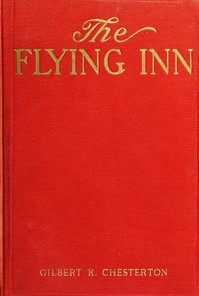
Before opening The Flying Inn — Edition Insights, the edition data offers a quick orientation: 93,757 words, 6 hr 48 min estimated reading time, and 27 detected text sections.
The text analysis averages about 19.9 words per sentence, while the detected sections provide another way to judge how the source is divided.
Project Gutenberg metadata also associates the work with “Fantasy fiction,” connecting these edition facts with the source record’s subject description.
Explore this collection
These alternatives are selected using recorded categories and estimated reading time.
About 397 minutes
Young Readers Enchanted Adventures
91,306 recorded words. 11 minutes difference from this book's estimate.
View Gutenberg source #68275About 366 minutes
Young Readers Enchanted Adventures
84,161 recorded words. 42 minutes difference from this book's estimate.
View Gutenberg source #64534About 451 minutes
Young Readers Enchanted Adventures
103,659 recorded words. 43 minutes difference from this book's estimate.
View Gutenberg source #63859Search stored excerpts and compare books → Choose by your preferences →
Choices use stored catalog measurements. Estimates vary with reading speed. A shared category is a catalog label, not a claim that two books have the same argument or literary quality.
Search reads excerpt text stored with this catalog and links to its associated Gutenberg record. The connection is stored in the site database; this tool does not recheck that every excerpt is word-for-word identical to that external record. Excerpt search does not cover every chapter and does not verify historical publication dates.
Catalog snapshot checked: 2026-09-25. Coverage: 92 public books, 92 available source excerpts.
Read the complete public-domain text at its original source.
Read on Project GutenbergThe opening chapter, 'A Sermon on Inns,' immediately establishes a seaside setting where a young woman scans the horizon for a sail, while below on the beach a parade of orators—socialists, clergymen, and a man with carrots around his hat—compete for attention. Chesterton’s prose is dense with ironic catalogues: the preacher denounces 'Milnian Sublapsarianism' with a 'wailing sneer,' and the crowd watches a box-trick performer in 'the hope of some time knowing what it was that he was doing.' This satirical panorama of public folly sets the stage for a narrative that will repeatedly pit common sense against abstract ideology.
Early in the story, two central objects emerge: a wooden inn sign and a small cask of rum. When the exhausted chauffeur confesses he has had 'no food today,' Humphrey Pump responds not with argument but with action—he fetches the cheese, hacks it with a jack-knife, and pours a measure of rum. The sign, uprooted from the road, is propped beside the keg as a makeshift license. Chesterton emphasizes the ritualistic quality of this act: the chauffeur drinks 'as if it were a fairy potion,' and his face shows a 'stony glitter.' The scene is a microcosm of the novel’s method: concrete, illegal hospitality defeats bureaucratic prohibition. Readers should note how objects carry symbolic weight—the sign is both a literal pub sign and a banner of defiance.
Chesterton gives the chauffeur a thick cockney dialect: 'Blarsted beauties o’ dibrike and no breakfast.' Pump, by contrast, speaks in a 'careless manner' that masks his shrewd sympathy. The exchange reveals a class dynamic where the educated man understands his countrymen 'enough to know that whatever he said he must say in a careless manner.' This linguistic contrast recurs throughout the excerpts. The narrator also notes that Pump’s 'dumb delicacy' is 'so English.' Such observations invite the reader to attend to how Chesterton uses speech patterns to signal character and to critique the gap between official language and lived experience. The chauffeur’s terror of 'the pleece' and 'gile' (jail) for possessing alcohol without a doctor’s letter underscores the absurdity of the prohibition laws that drive the plot.
The later excerpt shifts to a nocturnal roadside scene, with 'moonlit dust' and a chauffeur leaning 'heavily on the car with one arm, and saw that the arm was shaking.' The setting is sparse—a road, a car, a post—but Chesterton fills it with tension. Two 'eccentric aristocrats' posture in the road, oblivious to the driver’s distress. The physical details—the 'rather dilapidated boots' of Pump, the 'steady splendours of the moon' on his knife—ground the satire in tangible objects. The road becomes a stage for a collision between abstract ideologies (the aristocrats’ argument) and bodily needs (hunger, exhaustion). Readers should watch for how Chesterton uses landscape and weather to mirror the moral atmosphere: the 'bleak, black pinewoods' amplify the sense of isolation and lawlessness.
A key phrase appears when the chauffeur, after seeing the wooden sign, seems to 'drag up some forgotten courage from the foundations of some unfathomable sea.' The narrator calls this 'the forgotten courage of the people.' This moment crystallizes Chesterton’s theme: that ordinary people possess a latent, almost folkloric resilience that surfaces when tradition (the inn sign) is restored. The chauffeur’s transformation—from shaking terror to 'stony glitter'—is abrupt and almost supernatural. The excerpt leaves Pump studying him 'with some anxiety or even fear,' hinting that this reclaimed courage may have unpredictable consequences. This passage, though brief, suggests that the novel’s episodic structure will hinge on such small, symbolic rebellions rather than grand political schemes.
These excerpts reveal a novel built from set-pieces of comic resistance. Chesterton’s prose rewards attention to physical detail—the weight of a cheese, the glint of a knife, the taste of rum—as much as to his paradoxical aphorisms. Readers will find that the story moves quickly between debates, songs, and chases, but the core remains the tension between abstract law and concrete human need. Approach each chapter as a self-contained skirmish in a larger war of ideas, and note how Chesterton uses dialect, objects, and landscape to make his satire tangible.
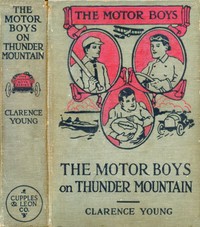
Years at this desk teach you that every chase hides a quieter longing. The Flying Inn—Chesterton’s rollicking, singing rebellion against dry laws—never quite lets go of a lost England. I find the same wistful ache beneath the boyish treasure-hunting in The Motor Boys on Thunder Mountain; Or, The Treasure Chest of Blue Rock — Key Ideas to Explore. Different roads, but both wanderers pack a secret rum of the heart.
Capture what you thought, learned, and would like to remember.