About 217 minutes
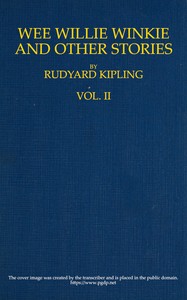
Wee Willie Winkie, and Other Stories. Volume 2 (of 2) — Reading Notes
Young Readers Enchanted Adventures
49,779 recorded words. 37 minutes difference from this book's estimate.
View Gutenberg source #63487
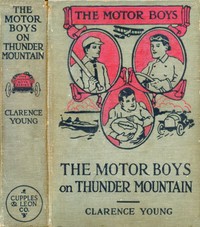
This digital edition of The Motor Boys on Thunder Mountain; Or, The Treasure Chest of Blue Rock — Key Ideas to Explore is described by source-level measurements including 58,200 words, 4 hr 14 min estimated reading time, and 31 detected text sections.
The text analysis averages about 14.2 words per sentence, while the detected sections provide another way to judge how the source is divided.
Project Gutenberg metadata also associates the work with “Gold mines and mining -- Juvenile fiction,” connecting these edition facts with the source record’s subject description.
Explore this collection
These alternatives are selected using recorded categories and estimated reading time.
About 217 minutes
Young Readers Enchanted Adventures
49,779 recorded words. 37 minutes difference from this book's estimate.
View Gutenberg source #63487About 331 minutes
Young Readers Enchanted Adventures
76,099 recorded words. 77 minutes difference from this book's estimate.
View Gutenberg source #60365About 169 minutes
Young Readers Enchanted Adventures
38,771 recorded words. 85 minutes difference from this book's estimate.
View Gutenberg source #65831Search stored excerpts and compare books → Choose by your preferences →
Choices use stored catalog measurements. Estimates vary with reading speed. A shared category is a catalog label, not a claim that two books have the same argument or literary quality.
Search reads excerpt text stored with this catalog and links to its associated Gutenberg record. The connection is stored in the site database; this tool does not recheck that every excerpt is word-for-word identical to that external record. Excerpt search does not cover every chapter and does not verify historical publication dates.
Catalog snapshot checked: 2026-09-25. Coverage: 92 public books, 92 available source excerpts.
Read the complete public-domain text at its original source.
Read on Project GutenbergThe Motor Boys on Thunder Mountain opens not with action but with a letter. Jerry Hopkins holds typewritten sheets and asks his chums what they think of Tinny Mallison's gold mine proposition. The scene is domestic, almost mundane—Ned Slade flicks dust from his new suit—yet it launches a series of events that will take the trio into Montana's wilds. The author, Clarence Young, establishes character through small gestures: Bob Baker's interest in chicken, Jerry's repeated reference to the screed. This quiet beginning contrasts sharply with later perils, such as the mountain lion encounter where Professor Snodgrass calmly remarks, 'How interesting!' while the boys face four gleaming yellow eyes.
The first chapter, 'Gold Mine Talk,' grounds the adventure in everyday conversation. Jerry, Ned, and Bob discuss Tinny Mallison's proposition, and the dialogue reveals their personalities: Jerry is the leader, Ned is fashion-conscious, Bob is good-natured and food-oriented. The letter itself is a plot device, but Young uses it to show how the Motor Boys transition from ordinary life to extraordinary events. By chapter II, 'The End of Everything,' the tone shifts dramatically. The title suggests disaster, but the excerpts do not reveal what that end is. Readers must infer from the chapter list that the boys face a crash, a threat from Noddy Nixon, and a plunge over a cliff. The opening's calm conversation makes these later dangers more striking.
In the middle excerpt, the boys confront two mountain lions on a trail. Young builds tension through sensory details: 'four gleaming, yellow eyes,' 'tails lashed their lean sides,' 'low growls.' The scene is a test of character. Professor Snodgrass remains 'the coolest of the party,' observing the beasts with scientific detachment. His line, 'How interesting!' becomes a recurring catchphrase. The boys, unarmed except for jackknives, must decide whether to run or stand. The professor advises against running, noting that mountain lions can cover ground quickly. This moment highlights the series' blend of adventure and practical survival tips. The lions' aggression is later explained by hidden cubs, a detail that adds depth to the encounter.
The professor's collecting box contains what he calls vespa maculata—likely wasps or hornets. He hesitates to use them, saying, 'I may never capture any more.' This small detail reveals his priorities: scientific collection over personal safety. When he raises the box to hurl at the lions, the boys are horrified. The scene is both comic and tense. Young uses the professor's eccentricity to solve a problem without violence, a pattern in the series. The vespa maculata are not described further, but their implied effectiveness suggests a non-lethal resolution. This episode exemplifies how the Motor Boys stories mix education with adventure, introducing readers to natural history terms while advancing the plot.
The chapter titles offer a roadmap to the novel's structure. 'Gold Mine Talk' (I) sets up the quest; 'Over the Cliff' (IV) and 'Down a Hole' (XIV) suggest physical challenges; 'Yellow Eyes' (XV) and 'Strange Noises' (XIX) hint at mysteries; 'Thunder Mountain' (XXIV) and 'The Storm' (XXV) build to a climax. The final chapter, 'Pay Dirt' (XXX), promises resolution. Young also plants recurring motifs: the treasure chest of Blue Rock, the avalanche, and the blue rock slide. Readers familiar with the series will recognize the formula—a letter, a journey, a villain (Noddy Nixon), and a scientific mentor. New readers can follow the adventure through these clear signposts, though the excerpts leave the treasure's nature and the boys' ultimate success uncertain.
Readers approaching The Motor Boys on Thunder Mountain for the first time should pay attention to the chapter titles and the early character dynamics. The opening letter is more than a plot device; it establishes the boys' camaraderie and their willingness to follow a lead into danger. The mountain lion scene demonstrates how Young balances suspense with humor, and Professor Snodgrass's role as a naturalist adds an educational layer. The novel rewards attention to small details—like the vespa maculata—that later prove important. Enjoy the ride, but keep an eye on the clues.
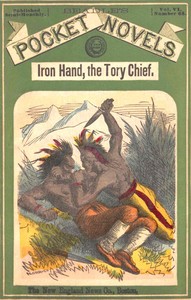
I remember how the Motor Boys carried their treasure map through Montana's wilds, trusting luck and nerve. There is a similar shadow-play in Iron Hand, Chief of the Tory League; or, The Double Face — Story, Setting & Ideas, where masks hide motives as surely as Blue Rock hid its gold. Both wander through danger, but the real treasure was always the quiet friendship between the pages.
Build a private reading journal entry for this title.