About 366 minutes
On the Brink of a Chasm: A record of plot and passion — Context and Discussion
Young Readers Enchanted Adventures
84,161 recorded words. 9 minutes difference from this book's estimate.
View Gutenberg source #64534
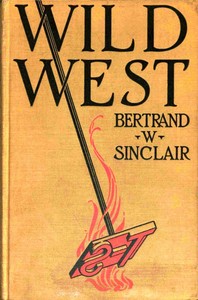
The catalog record for Wild west — Background and Themes provides practical reading context through 81,930 words, 5 hr 57 min estimated reading time, and 28 detected text sections.
The text analysis averages about 12.6 words per sentence, while the detected sections provide another way to judge how the source is divided.
Project Gutenberg metadata also associates the work with “Western stories,” connecting these edition facts with the source record’s subject description.
Explore this collection
These alternatives are selected using recorded categories and estimated reading time.
About 366 minutes
Young Readers Enchanted Adventures
84,161 recorded words. 9 minutes difference from this book's estimate.
View Gutenberg source #64534About 345 minutes
Young Readers Enchanted Adventures
79,338 recorded words. 12 minutes difference from this book's estimate.
View Gutenberg source #68712About 331 minutes
Young Readers Enchanted Adventures
76,099 recorded words. 26 minutes difference from this book's estimate.
View Gutenberg source #60365Search stored excerpts and compare books → Choose by your preferences →
Choices use stored catalog measurements. Estimates vary with reading speed. A shared category is a catalog label, not a claim that two books have the same argument or literary quality.
Search reads excerpt text stored with this catalog and links to its associated Gutenberg record. The connection is stored in the site database; this tool does not recheck that every excerpt is word-for-word identical to that external record. Excerpt search does not cover every chapter and does not verify historical publication dates.
Catalog snapshot checked: 2026-09-25. Coverage: 92 public books, 92 available source excerpts.
Read the complete public-domain text at its original source.
Read on Project GutenbergThe opening of Wild West establishes a pattern of pursuit that will recur throughout the novel. Robin Tyler chases a sorrel stallion named Red Mike, the scene built around motion: the horse's arched neck and brilliant mane, the bunch of range horses stretching like hounds, hoofs beating the turf like snare drums. The chase is not merely physical—it signals a persistent drive that defines the protagonist. Sinclair's prose moves with the riders, shifting from wide vistas of grassy ridges and sagebrush flats to the sudden intimacy of a hollow or a hidden cabin. This alternation between open country and concealed spaces becomes the novel's structural rhythm.
The narrative is propelled by a series of searches and chases. Robin Tyler is introduced hunting a horse; later, he and Tex Matthews search for a cabin in the Bad Lands. The chapter titles reinforce this: “The Straw in the Wind,” “One Step at a Time,” “Watchful Waiting,” “The Opening Gun.” Each chapter tends to begin with a character in motion—riding, looking, tracking—and ends with a discovery or a confrontation. The chase after Red Mike in Chapter I is a microcosm of the whole: a focused goal, obstacles of terrain, and a payoff that is both physical and symbolic. The stallion represents freedom and wildness, qualities the range riders both admire and seek to control.
Sinclair devotes careful attention to the geography of the Bad Lands, describing them as “etched deep in a general level, like a sunken garden planned by a madman.” The landscape is repetitive and disorienting: “one gulch, one canyon, one winding plateau is fellow to all the rest.” This sameness creates a constant tension. Characters must rely on a “keen sense of direction” to navigate, and even experienced riders like Robin and Tex become uncertain. The hidden cabin they seek is masked by pine thickets, and the approach is cautious, afoot, with carbines in hand. The terrain itself becomes an antagonist, hiding evidence and forcing characters to read the ground for tracks, fire-sign, and trampled earth.
The novel repeatedly stages scenes of looking and being seen. Robin and Tex “stared silently from a thicket of chokecherry” at a cabin; they “encircle this small basin, moving always under cover.” The act of discovery is often preceded by a moment of hidden observation. Conversely, the landscape offers few places to hide: the open ridges and flats expose riders to view. The tension between concealment and exposure is embodied in the corral and cabin found in the circular depression—a “meadow surrounded by a deep fringe of jack pine.” This hidden space, with its fresh cattle-signs and charred wood, suggests illicit activity, but the narrative withholds full explanation, leaving the reader as uncertain as the characters.
The story shifts between the wide, rolling range and confined, secretive locations. The opening chase takes place on open slopes; later scenes move into the “broken land” of the Bad Lands, where the characters descend into a “circular depression” and a “gloomy canyon.” The cabin and corral are enclosed, hidden, and associated with suspicion. This spatial contrast mirrors the plot's movement from public, lawful activity (round-ups, cattle drives) to private, possibly illegal dealings (rustling, hidden stock). The December wind and frost-hardened ground add a sensory dimension to these transitions: the open range is exposed and cold, while the hidden basin offers shelter but also danger. Sinclair uses weather and terrain to reinforce the mood of each setting.
Readers may find it useful to track the physical movements of the characters on an imaginary map. The novel's structure depends on the contrast between the known range and the unknown pockets of the Bad Lands. Pay attention to how Sinclair signals shifts in tone through changes in landscape—from the exhilaration of an open chase to the wariness of a hidden approach. The recurring image of a rider pausing to survey the country, cigarette in hand, is a quiet motif worth noticing.
Years among these stacks taught me a quiet kinship: in Sinclair's open ranges and hidden cabins, one finds the same restless pacing as in The Flying Inn — Edition Insights. Both cherish their shelters—a door half-shut, a room behind a wall—and both understand that pursuit always ends where someone has drawn the curtains close.
Build a private reading journal entry for this title.