About 408 minutes
The Flying Inn — Edition Insights
Young Readers Enchanted Adventures
93,757 recorded words. 11 minutes difference from this book's estimate.
View Gutenberg source #59239
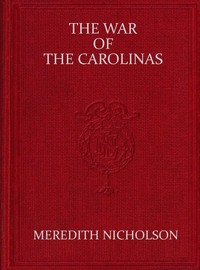
For The war of the Carolinas — Text and Context, the stored edition analysis reports 91,306 words, 6 hr 37 min estimated reading time, and 27 detected text sections.
The text analysis averages about 19.2 words per sentence, while the detected sections provide another way to judge how the source is divided.
Project Gutenberg metadata also associates the work with “Distilling, Illicit -- Fiction,” connecting these edition facts with the source record’s subject description.
Explore this collection
These alternatives are selected using recorded categories and estimated reading time.
About 408 minutes
Young Readers Enchanted Adventures
93,757 recorded words. 11 minutes difference from this book's estimate.
View Gutenberg source #59239About 366 minutes
Young Readers Enchanted Adventures
84,161 recorded words. 31 minutes difference from this book's estimate.
View Gutenberg source #64534About 357 minutes
Young Readers Enchanted Adventures
81,930 recorded words. 40 minutes difference from this book's estimate.
View Gutenberg source #68084Search stored excerpts and compare books → Choose by your preferences →
Choices use stored catalog measurements. Estimates vary with reading speed. A shared category is a catalog label, not a claim that two books have the same argument or literary quality.
Search reads excerpt text stored with this catalog and links to its associated Gutenberg record. The connection is stored in the site database; this tool does not recheck that every excerpt is word-for-word identical to that external record. Excerpt search does not cover every chapter and does not verify historical publication dates.
Catalog snapshot checked: 2026-09-25. Coverage: 92 public books, 92 available source excerpts.
Read the complete public-domain text at its original source.
Read on Project GutenbergThe novel opens with a dedicatory poem and a lyrical prose address 'To You at the Gate,' establishing a wistful, romantic tone that contrasts sharply with the comic political intrigue that follows. The narrator recalls a June evening, a girl in white at a gate, and a sense of loss—a mood that lingers only faintly as the story veers into farce. This initial dreaminess is a deliberate foil to the brisk, ironic voice that soon takes over, especially in scenes of social maneuvering and mock-heroic declarations of war.
The early pages employ a poetic, almost reverent prose: 'the unhurried, eddyless dusk,' 'a sweet wistfulness of lips and eyes.' This is the voice of a romantic observer. But once the plot moves to Ardsley and introduces characters like Mrs. Atchison and Jerry Dangerfield, the tone becomes markedly different. Dialogue is crisp, playful, and laden with understatement. Mrs. Atchison, for instance, murmurs that her brother Tommy is reliable only for trivial tasks, while Jerry responds with 'charming frankness' about making Tommy governor. The narrator now reports with a dry, amused detachment, letting the absurdity of the situation speak for itself. This shift in voice—from the gatekeeper’s longing to the drawing-room ironist—is the novel’s most distinctive stylistic feature.
The excerpt from the tea-table scene at Ardsley reveals how Nicholson controls pace through layered dialogue and delayed revelation. Jerry casually announces that Tommy Ardmore is now governor of North Carolina, but she builds the disclosure slowly: first hinting at a 'service of the greatest delicacy,' then pausing to feed sugar to robins. Mrs. Atchison’s curiosity is 'bound in chains of steel,' yet she feigns calm. The narrator matches this tension with short, punchy paragraphs and precise physical details—'picked a lump of sugar,' 'bit the edge of it daintily.' The effect is a comic striptease of information, where the pace quickens with each new absurdity (Tommy unaware of his elevation, Jerry having been governor herself). This structural playfulness recurs throughout, as the 'war' itself becomes a series of such staged revelations.
Nicholson seeds the narrative with small, telling gestures that accumulate meaning. Jerry follows 'the flight of a hawk' just before her big announcement, a detail that subtly underscores her predatory confidence. The sugar lump she bites and tosses to robins is a throwaway action, yet it epitomizes her casual command: she controls the scene, the sweets, and the birds. Mrs. Atchison’s tea service and the robins on the lawn recur as markers of domestic order that the plot will upend. These details are not merely decorative; they anchor the reader in a specific, sensory world—the 'daisy-meadow' of the opening, the 'silver bowl' of the tea table—even as the story spirals into political farce. The contrast between the pastoral opening and the drawing-room comedy is thus bridged by such concrete, recurring images.
Readers should attend to the novel’s deliberate tonal shifts: the lyrical frame is not abandoned but held in reserve, creating a quiet counterpoint to the boisterous plot. The 'war' itself is less a conflict than a pretext for character comedy, and the narrative’s pleasure lies in watching how each character—especially Jerry and Tommy—negotiates the gap between grand pretense and mundane reality. The book rewards those who enjoy irony delivered with a straight face.
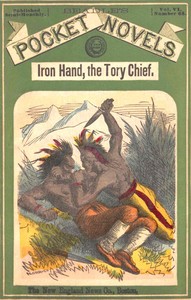
That rainy afternoon, The War of the Carolinas felt like eavesdropping on someone’s clever daydream—governors appointed by whim, borders dissolving into farce. Afterwards, I lingered on its underlying darkness, the moral doublespeak beneath the wit. That thread pulled me, almost without thinking, toward Iron Hand, Chief of the Tory League; or, The Double Face — Story, Setting & Ideas, where loyalty wears a stranger mask entirely. Same tangled South, different weather.
Save your reaction, strongest insight, and memorable passage.