About 459 minutes
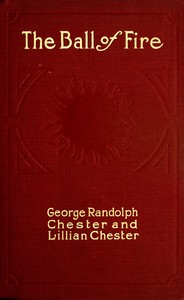
The Ball of Fire — Reading Companion
Young Readers Enchanted Adventures
105,547 recorded words. 8 minutes difference from this book's estimate.
View Gutenberg source #62653
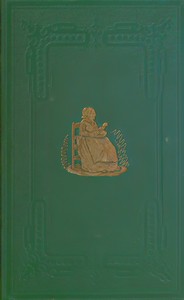
This digital edition of My Wayward Pardner; or, My Trials with Josiah, America, the Widow Bump, and Etcetery — Story, Setting & Ideas is described by source-level measurements including 103,659 words, 7 hr 31 min estimated reading time, and 22 detected text sections.
The text analysis averages about 20.8 words per sentence, while the detected sections provide another way to judge how the source is divided.
Project Gutenberg metadata also associates the work with “Humorous stories,” connecting these edition facts with the source record’s subject description.
Explore this collection
These alternatives are selected using recorded categories and estimated reading time.
About 459 minutes
Young Readers Enchanted Adventures
105,547 recorded words. 8 minutes difference from this book's estimate.
View Gutenberg source #62653About 408 minutes
Young Readers Enchanted Adventures
93,757 recorded words. 43 minutes difference from this book's estimate.
View Gutenberg source #59239About 397 minutes
Young Readers Enchanted Adventures
91,306 recorded words. 54 minutes difference from this book's estimate.
View Gutenberg source #68275Search stored excerpts and compare books → Choose by your preferences →
Choices use stored catalog measurements. Estimates vary with reading speed. A shared category is a catalog label, not a claim that two books have the same argument or literary quality.
Search reads excerpt text stored with this catalog and links to its associated Gutenberg record. The connection is stored in the site database; this tool does not recheck that every excerpt is word-for-word identical to that external record. Excerpt search does not cover every chapter and does not verify historical publication dates.
Catalog snapshot checked: 2026-09-25. Coverage: 92 public books, 92 available source excerpts.
Read the complete public-domain text at its original source.
Read on Project GutenbergThe narrator, Samantha Allen, establishes her voice in the preface by declaring her intention to write about “wimmen” and her husband Josiah’s opposition. The book’s structure follows a series of domestic episodes, each built around a specific trial—a late-night visit from Deacon Dobbins’s family, a disastrous picnic outing, or Josiah’s insistence on wearing his son’s blue uniform pantaloons with a red stripe. These scenes are not merely comic set-pieces; they are carefully constructed to expose the gap between Josiah’s self-importance and the reality of his behavior, while Samantha’s wry commentary undercuts every pretension.
The narrative proceeds through a series of tightly framed domestic disruptions. In the excerpt, a visit from Deacon Dobbins’s family escalates into an impromptu conference meeting that keeps the Allens up past ten o’clock. This triggers a chain of sleeplessness: the cat in the buttery, Josiah’s fear of cattle in the garden, and his repeated trips to check the clock. The episode ends with Samantha dreaming of Josiah drowning while Deacon Dobbins prays on the shore—a miniature allegory of ineffectual piety. Each disruption follows a similar pattern: a minor irritation (a nightcap forgotten, a cat locked in) balloons into a full-blown farce, revealing the household’s fragile order and Josiah’s obsessive punctuality.
Clothing functions as a recurring visual motif that signals character and conflict. Samantha’s nightcap, left on in front of guests, marks her as flustered and “meachin’.” Josiah’s hair stands “out in every direction” and one gallus hangs loose—a portrait of dishevelment that undercuts his dignity. Most striking is the blue pantaloons with a red stripe, a military uniform intended for son Thomas Jefferson. Josiah insists on wearing them to a picnic, despite the unfinished stitching and a machine oil stain. Samantha’s resigned observation—“if he wants to make a little bigger fool of himself, by wearin’ them blue pantaloons, I won’t stand in his light”—captures her blend of exasperation and tolerance. The pantaloons become a symbol of Josiah’s misplaced vanity and the absurdity of his attempts at grandeur.
The narrative moves restlessly between interior and exterior settings, each shift amplifying the comedy. The opening scene is confined to the parlor and bedroom, where the Allens’ sleepless night is a claustrophobic round of getting up, looking at the clock, and lying down again. The picnic at the lake, by contrast, opens into a public space where Josiah’s costume and Samantha’s loaded basket become visible to others. The journey itself—Josiah “armed up to the teeth” with a bottle of jelly in his coat pocket and utensils in his pantaloons—parodies a military expedition. This movement from private to public exposes the couple’s foibles to a wider audience, and Samantha’s narration heightens the contrast between the domestic chaos and the social expectations of a “splendid exertion.”
The title promises trials with Josiah, America, the Widow Bump, and “Etcetery,” but the excerpts introduce only Josiah and Samantha directly. America and the Widow Bump remain offstage, yet their names hint at a broader cast of characters who may appear later. The dedication “To Josiah and America” suggests that America is a person, possibly a daughter or relative, and the hope that “he and she both will put their best foot forward” implies a moral or didactic undercurrent. The Widow Bump’s name, with its comic alliteration, fits the pattern of Holley’s character names (Betsey Bobbet, Deacon Dobbins). While the excerpts do not reveal her role, the title’s “Etcetery” signals that the book’s structure is episodic, accumulating trials rather than following a single plot. Readers should expect a series of vignettes, each centered on a different source of domestic friction.
Holley’s comedy depends on the reader’s willingness to follow Samantha’s digressive, first-person account without expecting a conventional plot. The book rewards attention to repeated patterns—the way a small mishap escalates, the use of clothing as a marker of character, and the tension between private chaos and public performance. The excerpts suggest that the humor arises not from slapstick but from the precise observation of marital dynamics and social pretension.
I kept thinking about how Marietta Holley wraps her sharpest observations in such soft, rambling domestic details, the way we often hide our truest thoughts in everyday chatter. Loco or Love — Background and Themes reminded me of that same lingering ache, where love and foolishness get so tangled you can't tell where one ends and the other begins. It stayed with me quietly, like a half-finished conversation.
Use these questions to collect your thoughts before moving on.