About 167 minutes
Wild Nat, the Trooper; or, The Cedar Swamp Brigade — Themes and Context
Time Travel Speculative Futures
38,374 recorded words. 3 minutes difference from this book's estimate.
View Gutenberg source #65587
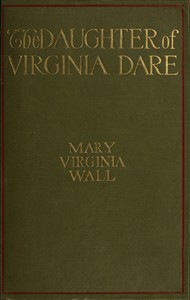
For The Daughter of Virginia Dare — A Reader’s Guide, the stored edition analysis reports 37,711 words, 2 hr 44 min estimated reading time, and 30 detected text sections.
The text analysis averages about 17.2 words per sentence, while the detected sections provide another way to judge how the source is divided.
Project Gutenberg metadata also associates the work with “Biographical fiction,” connecting these edition facts with the source record’s subject description.
Explore this collection
These alternatives are selected using recorded categories and estimated reading time.
About 167 minutes
Time Travel Speculative Futures
38,374 recorded words. 3 minutes difference from this book's estimate.
View Gutenberg source #65587About 159 minutes
Time Travel Speculative Futures
36,535 recorded words. 5 minutes difference from this book's estimate.
View Gutenberg source #68507About 187 minutes
Time Travel Speculative Futures
42,876 recorded words. 23 minutes difference from this book's estimate.
View Gutenberg source #66829Search stored excerpts and compare books → Choose by your preferences →
Choices use stored catalog measurements. Estimates vary with reading speed. A shared category is a catalog label, not a claim that two books have the same argument or literary quality.
Search reads excerpt text stored with this catalog and links to its associated Gutenberg record. The connection is stored in the site database; this tool does not recheck that every excerpt is word-for-word identical to that external record. Excerpt search does not cover every chapter and does not verify historical publication dates.
Catalog snapshot checked: 2026-09-25. Coverage: 92 public books, 92 available source excerpts.
Read the complete public-domain text at its original source.
Read on Project GutenbergThe novel opens with a prelude set in Portsmouth harbor, where the movement of ships and the play of light on water establish a pattern that recurs throughout the text. The narrative repeatedly shifts between the confined decks of vessels and the open landscapes of the Virginia coast, using these transitions to mark changes in mood and tension. The author's attention to sensory detail—the creaking of capstan, the whip of sails, the fragrance of hawthorn—grounds the historical setting while also creating a rhythmic alternation between anticipation and danger.
The structure of the excerpts reveals a deliberate pattern of departure and arrival. The prelude lingers on the departure from England, with Eleanor Dare's internal fear contrasting with the outward bustle. Later, Chapter XV opens with a lyrical passage on drifting down the Chesapeake, then abruptly shifts to the sight of an English ship and the introduction of new characters. This back-and-forth between the vulnerability of open water and the relative safety of land (or ship) creates a rhythm that mirrors the colonists' precarious existence.
The journey itself becomes a framing device: the barge's movement down the Pamunkey, the race to escape the swamp, and the final arrival at Jamestown all hinge on the physical act of traveling. The author uses these transitions to compress time and heighten emotional stakes, as when Captain Smith urges his men to row for their lives, and the prose accelerates accordingly.
Light on water is a persistent motif. The prelude describes the sun making a pathway of light for the ship, a hopeful image that Eleanor Dare's husband interprets as a good omen. In Chapter XV, the voyagers drift on "moon-kissed ripples" and "waves of liquid silver slowly changing into gold." These descriptions are not merely decorative; they mark moments of respite between scenes of danger. The contrast between the "salty waters of the Chesapeake" and the "morning mists" of the forest glades reinforces the dual nature of the setting—both beautiful and threatening.
The author also uses light to signal shifts in perspective. When the barge rounds into the James River, the sight of the English flag fluttering in the summer breeze is a visual relief after the darkness of the swamp. This interplay of light and shadow becomes a shorthand for the characters' fluctuating fortunes.
The excerpts show a marked contrast between formal, almost theatrical dialogue and colloquial, humorous exchanges. Eleanor Dare's interior monologue is measured and pious, while later scenes feature Captain Smith's gallant speeches and Adam's comic relief. For instance, Adam's claim of "mental reservations" after his vow-breaking provides a sudden shift from tension to levity. This variation in register prevents the historical setting from becoming static and gives each character a distinct voice.
The introduction of Mistress Forrest and her maid Anne Burras triggers a flirtatious exchange with Wingfield, whose plumed hat and sweeping bows belong to a different, more courtly world. The author uses these tonal shifts to navigate between the gravity of colonial survival and the lighter social dynamics of the settlement, suggesting that even in a precarious environment, human foibles persist.
The excerpts are drawn from the beginning and middle of the novel, and they reveal a pattern of scene construction. Each scene opens with a broad setting—harbor, river, swamp—then narrows to a specific action or dialogue. The prelude establishes the fleet's departure with a wide-angle view, then zooms in on Eleanor Dare's private thoughts. Similarly, Chapter XV begins with a panoramic description of drifting at night, then contracts to the barge's arrival and the ensuing conversation.
This telescoping structure allows the author to balance historical exposition with character-driven moments. The transitions are often abrupt: the lyrical passage on the Chesapeake is immediately followed by the pragmatic sight of Newport's ship. Such juxtapositions keep the narrative moving and prevent any single mood from dominating. Based on these excerpts, the novel appears to rely on a series of such set pieces, each anchored by a specific location and a shift in tone.
Readers may find it useful to track how the author handles the passage of time between scenes. The excerpts do not reveal the full arc of the plot, but the recurring motifs of light on water and movement between sea and shore suggest a narrative that values sensory immersion over strict chronology. Pay attention to how dialogue alters the pace, and note the moments when the prose becomes deliberately theatrical—these are likely cues to shifts in the story's emotional register.
There’s a moment in The Daughter of Virginia Dare where the tide seems to hold its breath between the shore and the open water, and I found myself thinking of how Hemingway’s characters drift along the Spanish hills, restless in the same way. Light never quite settles there either. It’s a strange kinship—two books, one longing. The Sun Also Rises — Key Ideas to Explore stays with me like damp sand on my shoes.
Use these questions to collect your thoughts before moving on.