About 164 minutes
The Daughter of Virginia Dare — A Reader’s Guide
Time Travel Speculative Futures
37,711 recorded words. 3 minutes difference from this book's estimate.
View Gutenberg source #58793
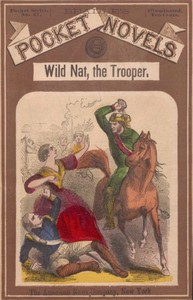
Wild Nat, the Trooper; or, The Cedar Swamp Brigade — Themes and Context can be approached with a clearer sense of reading commitment from its source measurements: 38,374 words, 2 hr 47 min estimated reading time, and 17 detected text sections.
The text analysis averages about 18.5 words per sentence, while the detected sections provide another way to judge how the source is divided.
Project Gutenberg metadata also associates the work with “United States -- History -- Revolution, 1775-1783 -- Fiction,” connecting these edition facts with the source record’s subject description.
Explore this collection
These alternatives are selected using recorded categories and estimated reading time.
About 164 minutes
Time Travel Speculative Futures
37,711 recorded words. 3 minutes difference from this book's estimate.
View Gutenberg source #58793About 159 minutes
Time Travel Speculative Futures
36,535 recorded words. 8 minutes difference from this book's estimate.
View Gutenberg source #68507About 187 minutes
Time Travel Speculative Futures
42,876 recorded words. 20 minutes difference from this book's estimate.
View Gutenberg source #66829Search stored excerpts and compare books → Choose by your preferences →
Choices use stored catalog measurements. Estimates vary with reading speed. A shared category is a catalog label, not a claim that two books have the same argument or literary quality.
Search reads excerpt text stored with this catalog and links to its associated Gutenberg record. The connection is stored in the site database; this tool does not recheck that every excerpt is word-for-word identical to that external record. Excerpt search does not cover every chapter and does not verify historical publication dates.
Catalog snapshot checked: 2026-09-25. Coverage: 92 public books, 92 available source excerpts.
Read the complete public-domain text at its original source.
Read on Project GutenbergWilliam R. Eyster's 1875 dime novel opens not on a battlefield but in a domestic interior, where two women sit by a fireside discussing a suitor's reputation. The elderly Mrs. Vale warns her daughter Catherine that young Ernshaw is known as 'Wild Nat'—a name that, she argues, would never be given to a man of reliable character. This early emphasis on reputation and naming sets up a story driven by suspicion and hidden identities rather than broad military strategy.
The catalog subjects list a wide array of elements: battles, loyalists, minutemen, and historical figures like Sir Henry Clinton and Daniel Morgan. Yet the excerpts from the first two chapters contain no battles, no named historical figures, and no military engagements. Instead, the narrative centers on Catherine Vale's abduction, her mother's grief, and her brother John's impulsive revenge. The catalog's military subjects may appear later, but the opening chapters are a domestic drama of abduction and pursuit, with the war serving as backdrop rather than focus.
The narrator adopts an omniscient, slightly formal tone, opening with a sweeping statement about 'the darkest hour' of the Revolution before narrowing to a specific household. Dialogue carries much of the plot: Mrs. Vale's cautious warnings, Catherine's obedient replies, and the tense exchange with Captain Preston. The prose is efficient, with short paragraphs and rapid shifts between speech and action. When John Vale confronts Preston, the scene moves quickly from words to gunfire—'a ball from the pistol of John Vale had done its work'—showing a preference for sudden violence over extended description.
Several details recur in the excerpts: the name 'Wild Nat' as a marker of character, the motif of doors and thresholds (the house door ajar, the window thrown open for escape), and the presence of a 'negro man' who acts with quick wit but remains unnamed. The latter detail is striking given the catalog subject 'African Americans — Fiction'; the excerpts show a Black character who is loyal and resourceful but given no name or interiority. This suggests the novel may treat African American characters as functional helpers rather than developed individuals, a pattern worth noting as the story unfolds.
Readers approaching Wild Nat, the Trooper should be alert to the gap between the catalog's military subjects and the domestic abduction plot that dominates the opening. The novel's title character, 'Wild Nat,' is initially discussed rather than seen, and the Cedar Swamp Brigade is mentioned but not yet shown. The excerpts offer a tight, dialogue-driven scene of family conflict and sudden violence, with the Revolution as a distant but menacing presence.
There’s something in the weary snap of violence in Wild Nat, the Trooper that feels muffled, almost domestic, like a quarrel heard through a wall. It reminded me of an old volume, The Collected Writings of Dougal Graham, "Skellat" Bellman of Glasgow, Vol. 2 of 2 — Reading Companion, where the rough verses carry the same hollow echo of lives turned abruptly, quietly sideways.
Capture what you thought, learned, and would like to remember.