About 420 minutes
The Three Lovers — Reading Companion
Time Travel Speculative Futures
96,574 recorded words. 9 minutes difference from this book's estimate.
View Gutenberg source #63479
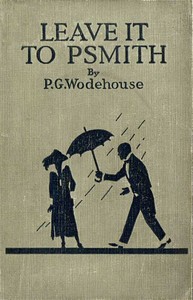
This digital edition of Leave it to Psmith — Edition Insights is described by source-level measurements including 94,317 words, 6 hr 51 min estimated reading time, and 54 detected text sections.
The text analysis averages about 13.6 words per sentence, while the detected sections provide another way to judge how the source is divided.
Project Gutenberg metadata also associates the work with “Humorous stories,” connecting these edition facts with the source record’s subject description.
Explore this collection
These alternatives are selected using recorded categories and estimated reading time.
About 420 minutes
Time Travel Speculative Futures
96,574 recorded words. 9 minutes difference from this book's estimate.
View Gutenberg source #63479About 453 minutes
Time Travel Speculative Futures
104,163 recorded words. 42 minutes difference from this book's estimate.
View Gutenberg source #62409About 460 minutes
Time Travel Speculative Futures
105,755 recorded words. 49 minutes difference from this book's estimate.
View Gutenberg source #64219Search stored excerpts and compare books → Choose by your preferences →
Choices use stored catalog measurements. Estimates vary with reading speed. A shared category is a catalog label, not a claim that two books have the same argument or literary quality.
Search reads excerpt text stored with this catalog and links to its associated Gutenberg record. The connection is stored in the site database; this tool does not recheck that every excerpt is word-for-word identical to that external record. Excerpt search does not cover every chapter and does not verify historical publication dates.
Catalog snapshot checked: 2026-09-25. Coverage: 92 public books, 92 available source excerpts.
Read the complete public-domain text at its original source.
Read on Project GutenbergThe opening chapter of Leave It to Psmith immediately establishes Wodehouse's comic voice through a description of Lord Emsworth: "drooping like a wet sock, as was his habit when he had nothing to prop his spine against." This simile, both absurd and precise, sets the tone for a novel where physical posture mirrors mental vacancy. The narrator's diction—"fluffy-minded," "boneheaded"—is playful yet exact, creating a world where character traits are rendered through vivid, economical phrases.
Wodehouse's word choices consistently elevate mundane descriptions into comic art. Lord Emsworth is "that amiable and boneheaded peer," a phrase that balances affection with mockery. The narrator notes his "pale blue eyes" and "furrowed brow," but the humor lies in the contrast between his physical state and his usual "serene and unruffled placidity." The simile of the castle being "shaggy with vegetation" is wittily applied to its owner, showing how Wodehouse uses environmental description to reinforce character. Such diction avoids abstraction, grounding humor in concrete, visual details.
Psmith's dialogue is marked by elaborate politeness and ironic formality. When confronting the impostor Cootes, he asks, "What is a pale parabola of Joy?"—a nonsensical question that exposes the pretensions of modern poetry while asserting his own intellectual superiority. His use of "Comrade" as a form of address is both mock-socialist and disarmingly friendly. Cootes's response—"Oh, hell!"—contrasts sharply with Psmith's measured tones, highlighting the gap between the suave schemer and the flustered thief. Wodehouse crafts dialogue where each character's speech patterns reveal their nature: Psmith's elaborate circumlocutions versus Cootes's blunt expletives.
The novel's plot hinges on mistaken identity and hidden agendas, but Wodehouse structures scenes to maximize comic tension through delayed revelations. In the excerpt, Psmith discovers Cootes's imposture not through external evidence but by testing his knowledge of McTodd's poetry. The scene unfolds in a single room, with Psmith "rambling idly" while his mind races. The telegram—a physical object—becomes a crucial prop: Psmith pockets it to prevent exposure. Wodehouse uses such small, concrete actions to advance the plot while maintaining a light, conversational tone. The structure of the scene—calm interrogation followed by sudden collapse—mirrors the rhythm of a joke.
Several details recur across the excerpts, reinforcing key themes. The necklace—"Lady Constance's necklace"—is the object of desire for multiple characters, linking the plots of Freddie, Lord Emsworth, and Psmith. The setting of Blandings Castle itself becomes a character: its "great library" and "occasional table" are stages for intrigue. Psmith's habit of "rambling idly" and his "long arm" are physical traits that underscore his casual confidence. The poet McTodd's book Songs of Squalor is a running joke, its title parodying the earnestness of modern verse. These details create a cohesive world where every object and gesture carries comic weight.
Readers attentive to Wodehouse's craft will notice how he balances farce with linguistic precision. The novel rewards close reading: each simile, each piece of dialogue, each prop contributes to a tightly constructed comedy of manners. Pay particular attention to Psmith's verbal tics—his use of "Comrade," his elaborate circumlocutions—as they reveal his method of controlling situations through language.
I remember midnights under the porch light, a stolen flashlight and Wodehouse’s slangy elegance, that game of masks where even the thief lands gently. It stirred something The Overman — Reading Notes also touched—not the plot, but the quiet ache of playing a part so well you almost forget who you were. That feeling hasn't left me since.
Your answers remain private and are stored only in this browser.