About 411 minutes
Leave it to Psmith — Edition Insights
Time Travel Speculative Futures
94,317 recorded words. 9 minutes difference from this book's estimate.
View Gutenberg source #60067
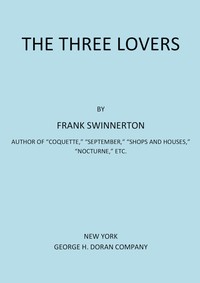
This digital edition of The Three Lovers — Reading Companion is described by source-level measurements including 96,574 words, 7 hr estimated reading time, and 25 detected text sections.
The text analysis averages about 12.4 words per sentence, while the detected sections provide another way to judge how the source is divided.
Project Gutenberg metadata also associates the work with “Orphans -- Fiction,” connecting these edition facts with the source record’s subject description.
Explore this collection
These alternatives are selected using recorded categories and estimated reading time.
About 411 minutes
Time Travel Speculative Futures
94,317 recorded words. 9 minutes difference from this book's estimate.
View Gutenberg source #60067About 453 minutes
Time Travel Speculative Futures
104,163 recorded words. 33 minutes difference from this book's estimate.
View Gutenberg source #62409About 460 minutes
Time Travel Speculative Futures
105,755 recorded words. 40 minutes difference from this book's estimate.
View Gutenberg source #64219Search stored excerpts and compare books → Choose by your preferences →
Choices use stored catalog measurements. Estimates vary with reading speed. A shared category is a catalog label, not a claim that two books have the same argument or literary quality.
Search reads excerpt text stored with this catalog and links to its associated Gutenberg record. The connection is stored in the site database; this tool does not recheck that every excerpt is word-for-word identical to that external record. Excerpt search does not cover every chapter and does not verify historical publication dates.
Catalog snapshot checked: 2026-09-25. Coverage: 92 public books, 92 available source excerpts.
Read the complete public-domain text at its original source.
Read on Project GutenbergThe novel opens on a suddenly cold September evening in London, with the wind carrying gusts of fine rain and street-lamps revealing naked paving-stones. This atmospheric description establishes a pattern: weather and setting are used to reflect characters' inner states throughout the book. The narrative moves between Patricia's perspective and those of her three suitors, often shifting abruptly from external action to interior monologue. Swinnerton builds tension through contrasts—between the bohemian studio parties and quiet domestic scenes, between cynical remarks and moments of intense longing.
The text is rich with sensory details that recur across scenes. The opening description of cats racing about houses, drunken with primeval savagery, establishes a motif of untamed energy that surfaces later in characters' impulses. Fire appears repeatedly: Edgar sits by a waning fire, and later a flicker of flame lights his face as he realizes his love. These images are not merely decorative; they anchor emotional shifts. The wind and rain return at key moments, as when Edgar feels the venom of Gaythorpe's cynicism returning to his memory. Swinnerton uses such recurring elements to create a cohesive sensory world without over-explaining.
The narrative frequently moves from external social scenes to private, introspective passages. In one excerpt, Edgar returns home and sits moodily by a fire, replaying a conversation. His thoughts drift into a vivid daydream where he imagines Patricia's presence so strongly that his lips move and his hands extend. Then his eyes open, and he sees his own arms with shame. This movement—from dialogue to silent reflection, from imagined communion to awkward reality—is a structural pattern. The novel alternates between crowded studio parties and solitary moments, between spoken words and unspoken desires, creating a rhythm that mirrors the push and pull of romantic tension.
Minor characters like Gaythorpe and the Misses Wickford serve as catalysts for the protagonist's self-discovery. Gaythorpe's cynical remarks about women and marriage linger in Edgar's mind, returning with added venom. The Misses Wickford, with their grotesque perspective and endless talk of housemaids, drive Edgar to seek Monty's company. These characters are not fully developed but are used to provoke reactions in the main figures. Their conversations are reported selectively, often filtered through a character's memory or irritation. This technique keeps the focus on the central emotional arc while using secondary voices to advance it.
The novel is divided into two parts, with chapter titles that often indicate a character's name or a thematic concept: 'The Studio,' 'Patricia,' 'Edgar Moves,' 'The Sibyl,' 'Night Call.' These titles guide the reader's attention to specific characters or turning points. The first part ends with 'Mischief,' the second with 'Babies,' suggesting a progression from playful tension to domestic consequences. The chapter 'A Day in Patricia's Life' and 'Another Day' create parallel structures, offering contrasting views of the same character. This deliberate naming gives the narrative a clear architecture, even as the prose itself moves fluidly between inner and outer worlds.
Readers attentive to Swinnerton's use of weather, fire, and movement between solitude and society will find a tightly constructed exploration of desire and indecision. The novel rewards close attention to how characters remember and reinterpret conversations, as these mental replays often carry more weight than the original exchanges. The incomplete excerpts leave the resolution unclear, but the patterns established in the opening chapters—of sudden cold, flickering light, and unspoken longing—are likely to persist throughout.
Reading The Three Lovers, I kept thinking of Patricia’s quiet loneliness beneath all that chatter—how weather seemed to sit inside her. It reminded me of another voice, rougher and older, who understood that same ache for connection amid noise: The Collected Writings of Dougal Graham, "Skellat" Bellman of Glasgow, Vol. 2 of 2 — Reading Companion. Both feel like rain on a window, watched from within.
A brief reflection can help important ideas stay with you longer.