About 489 minutes
The step on the stair — Background and Themes
Time Travel Speculative Futures
112,295 recorded words. 23 minutes difference from this book's estimate.
View Gutenberg source #68153
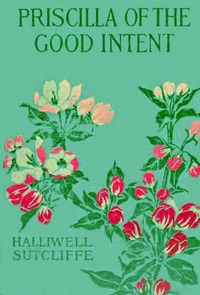
The source record for Priscilla of the Good Intent: A Romance of the Grey Fells — Edition Insights measures this digital text at 117,577 words, 8 hr 32 min estimated reading time, and 28 detected text sections.
The text analysis averages about 17.9 words per sentence, while the detected sections provide another way to judge how the source is divided.
Project Gutenberg metadata also associates the work with “Mate selection -- Fiction,” connecting these edition facts with the source record’s subject description.
Explore this collection
These alternatives are selected using recorded categories and estimated reading time.
About 489 minutes
Time Travel Speculative Futures
112,295 recorded words. 23 minutes difference from this book's estimate.
View Gutenberg source #68153About 460 minutes
Time Travel Speculative Futures
105,755 recorded words. 52 minutes difference from this book's estimate.
View Gutenberg source #64219About 453 minutes
Time Travel Speculative Futures
104,163 recorded words. 59 minutes difference from this book's estimate.
View Gutenberg source #62409Search stored excerpts and compare books → Choose by your preferences →
Choices use stored catalog measurements. Estimates vary with reading speed. A shared category is a catalog label, not a claim that two books have the same argument or literary quality.
Search reads excerpt text stored with this catalog and links to its associated Gutenberg record. The connection is stored in the site database; this tool does not recheck that every excerpt is word-for-word identical to that external record. Excerpt search does not cover every chapter and does not verify historical publication dates.
Catalog snapshot checked: 2026-09-25. Coverage: 92 public books, 92 available source excerpts.
Read the complete public-domain text at its original source.
Read on Project GutenbergThe novel opens not with its titular Priscilla, but with David Blake, the blacksmith, blowing lustily at his bellows while Billy the Fool lounges in the doorway. Their banter about work and play—Billy calls idleness 'like good ale'—establishes a voice that is both earthy and sly. The forge, described as standing 'just this side of the village as you entered it from Shepston,' anchors the story in a specific, tactile landscape.
Despite the catalog subject 'Mate selection,' the excerpts focus less on courtship than on David's internal conflict. He leaves Priscilla without explanation, and her tears—whether for him or herself—remain ambiguous. The narrative voice favors dialogue and gesture over interiority, trusting readers to infer motive from action.
The dialect and rhythm of speech are central to the novel's texture. Billy the Fool speaks in a deliberate, almost poetic cadence: 'Seems to trickle down your body, does idleness, like good ale.' His simplicity is not stupidity; he sees through David's pretense that bellows-blowing is 'play,' and later divines David's departure 'by the same instinct which befriended him in his comradeship with birds and beasts.'
David, too, uses dialect—'Ay, could I. Blowing bellows is the grandest frolic ever I came across'—but his tone shifts when he leaves Priscilla, carrying 'a big air' and wearing 'the dignity of grief, none of its meanness or self-pity.' The contrast between Billy's unguardedness and David's stoic self-control suggests a community where emotion is expressed through action and understatement.
The forge is more than a backdrop; it is a repository of family history. David tells Billy, 'There’s been one o’ my name here since the Year One, or nigh about,' and he cannot bear to see 'another name above the door.' This attachment to place and lineage drives his decision to leave—a paradox that the excerpts leave unresolved.
The 'Grey Fells' of the subtitle are barely glimpsed in the provided text, but the village of Garth is evoked through small details: the 'cool of a spring morning,' the 'dusty street,' the clock that Priscilla both loves and wearies of. The landscape is felt indirectly, through the characters' rootedness and their reluctance to leave.
Despite the subtitle 'A Romance of the Grey Fells,' the excerpts offer no declarations of love. David's visit to Priscilla is marked by miscommunication: she hints at a desire for change—'I’m weary of its notes sometimes'—but he is already 'set toward the lonely lands.' His farewell is wordless; he 'stepped out into the dusty street' without explanation.
Priscilla's reaction—'she sat down at the table, and laid her head on it, and sobbed bitterly'—is the only emotional release in the scene. The narrator withholds judgment, noting that 'whether the tears were for David, or for herself, she did not know.' This ambiguity suggests that the romance may be as much about self-discovery as about partnership.
The excerpts from Priscilla of the Good Intent reveal a novel that resists easy categorization. Its catalog subjects—mate selection, courtship, country life—are present but refracted through a lens of work, place, and unspoken feeling. Readers should attend to the dialogue and the silences between words; the story's meaning lies in what is left unsaid. Billy the Fool, with his 'child’s eyes' and his love of 'playing at a right good game,' may be the truest guide to the novel's heart.
I remember sitting in my grandmother’s armchair, the soft rain against the glass, thinking of Billy the Fool’s quiet wisdom about work and play. Something in David Blake’s restless leaving reminded me of how that other book, "Gentlemen prefer blondes" — Reading Companion, once made me smile at the same stubborn gravity people carry. Both felt like old friends, nodding at how we choose.
Build a private reading journal entry for this title.