About 299 minutes
The Able McLaughlins — Background and Themes
Time Travel Speculative Futures
68,734 recorded words. 23 minutes difference from this book's estimate.
View Gutenberg source #59845
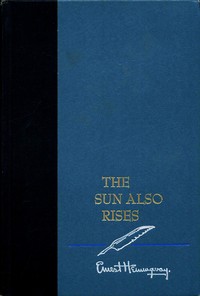
This digital edition of The Sun Also Rises — Key Ideas to Explore is described by source-level measurements including 73,913 words, 5 hr 22 min estimated reading time, and 11 detected text sections.
The text analysis averages about 9.6 words per sentence, while the detected sections provide another way to judge how the source is divided.
Project Gutenberg metadata also associates the work with “Americans -- France -- Fiction,” connecting these edition facts with the source record’s subject description.
Explore this collection
These alternatives are selected using recorded categories and estimated reading time.
About 299 minutes
Time Travel Speculative Futures
68,734 recorded words. 23 minutes difference from this book's estimate.
View Gutenberg source #59845About 411 minutes
Time Travel Speculative Futures
94,317 recorded words. 89 minutes difference from this book's estimate.
View Gutenberg source #60067About 420 minutes
Time Travel Speculative Futures
96,574 recorded words. 98 minutes difference from this book's estimate.
View Gutenberg source #63479Search stored excerpts and compare books → Choose by your preferences →
Choices use stored catalog measurements. Estimates vary with reading speed. A shared category is a catalog label, not a claim that two books have the same argument or literary quality.
Search reads excerpt text stored with this catalog and links to its associated Gutenberg record. The connection is stored in the site database; this tool does not recheck that every excerpt is word-for-word identical to that external record. Excerpt search does not cover every chapter and does not verify historical publication dates.
Catalog snapshot checked: 2026-09-25. Coverage: 92 public books, 92 available source excerpts.
Read the complete public-domain text at its original source.
Read on Project GutenbergFrom its first sentence, The Sun Also Rises establishes a narrator who measures achievement in terms of physical competence and social standing. The opening description of Robert Cohn—middleweight champion at Princeton, nose flattened by an overmatched bout—is delivered with a detachment that characterizes Jake Barnes’s voice throughout. Hemingway’s prose relies on short declarative statements and repeated syntactic patterns, creating a rhythm that mirrors the characters’ restless movements between cafés, fishing trips, and fiestas. The dialogue, clipped and often evasive, carries subtext that the narrator refuses to gloss. In the excerpted scene at the Café Iruña, Brett’s repeated “What rot” and Mike’s self-deprecating war story reveal more about their relationships than any direct exposition could. This editorial note examines how Hemingway’s authorial choices in diction, dialogue, and description shape the novel’s emotional landscape.
Hemingway’s narrator, Jake Barnes, consistently undercuts dramatic potential with flat, factual statements. When describing Cohn’s boxing career, he says, “Do not think that I am very much impressed by that as a boxing title,” immediately deflating any heroic reading. The physical details—Cohn’s flattened nose, his distaste for boxing—are presented without emotional commentary. This technique extends to the war references that permeate the dialogue. Mike’s story about buying fake medals is told as a comic anecdote, yet the punchline (“Gave one to each girl. Form of souvenir.”) carries the weight of a generation’s disillusionment. The narrator never explains this; he simply records the laughter. By refusing to interpret, Hemingway forces readers to infer the emotional cost beneath the surface.
The café conversation in the excerpt reveals character through what is said and what is omitted. Brett’s greeting—“Hello, you chaps!”—is cheerful, but her immediate dismissal of Cohn’s claim to have brought them (“What rot. We’d have gotten here earlier if you hadn’t come.”) establishes tension. Mike’s repeated refusal to tell his war stories (“I’ll not tell that story. It reflects discredit on me.”) becomes a running joke, yet the content of those stories—horse bolting down Piccadilly, medals given away in a nightclub—points to a deeper unease about honor and masculinity. The characters interrupt each other, finish sentences, and laugh at shared references that exclude Cohn, who asks literal questions (“Were you in the war, Mike?”). Hemingway’s dialogue thus maps social hierarchies and emotional distances without authorial intrusion.
Hemingway anchors his scenes in precise, sensory details that carry symbolic weight. The description of the bullring ticket-houses—windows marked SOL, SOL Y SOMBRA, and SOMBRA—serves as a quiet metaphor for the characters’ own positions between sun and shadow, action and observation. The white wicker tables of the Café Iruña, the Basque berets worn by Brett and Mike, and the bare-headed Cohn in spectacles all contribute to a visual economy where every object signals belonging or exclusion. The narrator’s attention to the physical environment—the square, the closed ticket windows, the arrangement of chairs—creates a stage on which the characters perform their anxieties. These details are never explained; they are simply observed, leaving readers to assemble meaning.
Hemingway’s prose relies on repetition of words and sentence structures to create a hypnotic, almost incantatory rhythm. In the opening paragraph, “boxing” appears four times, “Cohn” five times, and the phrase “he was” recurs to build a portrait through accumulation. This technique carries into dialogue: Brett’s “What rot” is repeated three times in a short exchange, each iteration reinforcing her impatience. Mike’s story is punctuated by the phrase “I’ll not tell that story,” which becomes a refrain. The repetition mimics the circular nature of the characters’ conversations and their inability to move beyond past traumas. Hemingway’s stylistic choice to avoid subordinate clauses and complex sentences forces the reader to experience time as the characters do—in discrete, often repetitive moments.
Readers attentive to Hemingway’s craft will notice how much is conveyed by what is left out. The narrator’s refusal to interpret, the characters’ evasive dialogue, and the precise, almost clinical descriptions of setting all work together to create a world where feeling is expressed through action and gesture rather than introspection. Pay attention to the spaces between words—the pauses, the interruptions, the jokes that fall flat—as they often carry the novel’s emotional weight.
Sometimes I think about how Hemingway lets silence carry the weight, that café scene where nothing much is said but everything is felt. It reminded me of a quieter book, The Able McLaughlins — Background and Themes, where the characters hold back too, and the truth sits under their words like a stone in a pocket. That ache stays with you long after.
Your answers remain private and are stored only in this browser.