About 53 minutes
The Overman — Reading Notes
Time Travel Speculative Futures
12,151 recorded words. 1 minutes difference from this book's estimate.
View Gutenberg source #67732
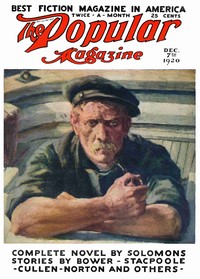
The source record for You Ask Anybody — A Reader’s Guide measures this digital text at 12,212 words, 54 min estimated reading time, and 2 detected text sections.
The text analysis averages about 20.8 words per sentence, while the detected sections provide another way to judge how the source is divided.
Project Gutenberg metadata also associates the work with “Western stories,” connecting these edition facts with the source record’s subject description.
Explore this collection
These alternatives are selected using recorded categories and estimated reading time.
About 53 minutes
Time Travel Speculative Futures
12,151 recorded words. 1 minutes difference from this book's estimate.
View Gutenberg source #67732About 34 minutes
Time Travel Speculative Futures
7,730 recorded words. 20 minutes difference from this book's estimate.
View Gutenberg source #64835About 33 minutes
Time Travel Speculative Futures
7,503 recorded words. 21 minutes difference from this book's estimate.
View Gutenberg source #67165Search stored excerpts and compare books → Choose by your preferences →
Choices use stored catalog measurements. Estimates vary with reading speed. A shared category is a catalog label, not a claim that two books have the same argument or literary quality.
Search reads excerpt text stored with this catalog and links to its associated Gutenberg record. The connection is stored in the site database; this tool does not recheck that every excerpt is word-for-word identical to that external record. Excerpt search does not cover every chapter and does not verify historical publication dates.
Catalog snapshot checked: 2026-09-25. Coverage: 92 public books, 92 available source excerpts.
Read the complete public-domain text at its original source.
Read on Project GutenbergIn the opening pages of B. M. Bower's 1920 story, Casey Ryan is introduced not by his appearance but by the stories men tell about him—tales of driving the fastest six horses in Colorado, whooping past holdups, and grinning while passengers prayed. The narrative voice itself mimics oral tradition: bearded men suck pipes and cackle as they recount his youth. This framing establishes Casey as a figure whose identity is inseparable from legend, yet the excerpts soon undercut that mythic status. When a flat-chested, lank passenger complains about riding on two wheels, Casey dismisses him with a boast: "I've done it on one." The boast is followed by a practical concern—the nigh leader is tenderfooted and needs shoeing. Here, Bower juxtaposes bravado with mundane responsibility, a pattern that recurs as Casey courts the widow at Lucky Lode Mine.
Throughout the excerpts, speed defines Casey Ryan. He drove the fastest six horses in Colorado; he drills across the desert in a Ford, leaving a yellow dust cloud that "vainly tried to keep up." When he must stop for a flat tire, he kills the engine and gazes at Furnace Mountain, thinking of the widow's biscuits. Even his impatience is a trait: unlike most desert dwellers, he refuses to loiter in town, instead loading dynamite beside him and starting back at three in the afternoon. Bower uses velocity to signal competence and restlessness. But speed also creates tension. The widow, by contrast, represents stillness and domestic order. She frowns at his swearing, worries about his drinking, and extracts promises. Casey's driving is his art and his refuge; the widow's demands threaten to slow him down.
The widow at Lucky Lode Mine imposes conditions on Casey's affection. She cannot marry a drinking man; she worries about the example for her "innocent little ones." Casey agrees, but the narrative tracks his growing unease. After a dynamite accident—a box of giant powder exploded by a hailstone—the widow again raises the liquor question. Casey admits carelessness but feels "the Irish rose up hotly within him." He has not wanted a drink until that moment. Bower captures the paradox: the more the widow moralizes, the more Casey chafes. He chews tobacco and drives in "broody silence." The phrase "Damn that sirup!" erupts as abruptly as the dynamite, linking his suppressed rebellion to the explosive material he handles. The widow's reforms are presented not as salvation but as a source of friction.
The story's frame leans heavily on oral testimony. Men talk of Casey and smile; they remember the time he licked a Swede foreman, or sent a little girl back to Vermont, borrowing money to play poker to win money to pay back what he borrowed. These anecdotes are offered as proof of character, but they also raise questions. The same man who boasts "Casey can drive. You ask anybody" is also the man who kisses the widow and then sees a frown "like a section of that ridgy cardboard they wrap bottles in." Bower lets the reader weigh the legend against the man. The widow herself has heard "awful tales" and thinks them funny—until they involve her. The narrative voice never fully endorses or debunks Casey's reputation; it simply presents the stories and lets the contradictions stand.
Readers should attend to the gap between what Casey says and what the narrative shows. His boasts are undercut by practical worries; his promises to the widow are followed by brooding silence. Bower's prose is lean, favoring dialogue and action over interior monologue, so character emerges through behavior. The Ford, the dynamite, the dust cloud—these are not just props but extensions of Casey's nature. Watch how objects and speed reveal his conflicts, and how the widow's domesticity becomes a counterforce. The story does not resolve whether Casey can be both a freewheeling driver and a sober husband; it leaves that tension in the air, much like the dust he kicks up behind him.
I finished that Casey Ryan story feeling like I’d watched someone try to hold both halves of themselves at once—the speed and the stillness. It stayed with me. There’s something in The Overman — Reading Notes that brushes against the same ache, all quiet and unresolved. I keep thinking about that tension, how we promise things we aren’t sure we can keep.
Your answers remain private and are stored only in this browser.