About 45 minutes
Loco or Love — Background and Themes
Young Readers Enchanted Adventures
10,268 recorded words. 1 minutes difference from this book's estimate.
View Gutenberg source #66722
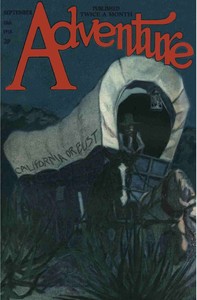
This digital edition of Tied Up for Tombstone — Context and Discussion is described by source-level measurements including 9,978 words, 44 min estimated reading time, and 2 detected text sections.
The text analysis averages about 15.5 words per sentence, while the detected sections provide another way to judge how the source is divided.
Project Gutenberg metadata also associates the work with “Short stories,” connecting these edition facts with the source record’s subject description.
Explore this collection
These alternatives are selected using recorded categories and estimated reading time.
About 45 minutes
Young Readers Enchanted Adventures
10,268 recorded words. 1 minutes difference from this book's estimate.
View Gutenberg source #66722About 50 minutes
Young Readers Enchanted Adventures
11,450 recorded words. 6 minutes difference from this book's estimate.
View Gutenberg source #66823About 62 minutes
Young Readers Enchanted Adventures
14,039 recorded words. 18 minutes difference from this book's estimate.
View Gutenberg source #67118Search stored excerpts and compare books → Choose by your preferences →
Choices use stored catalog measurements. Estimates vary with reading speed. A shared category is a catalog label, not a claim that two books have the same argument or literary quality.
Search reads excerpt text stored with this catalog and links to its associated Gutenberg record. The connection is stored in the site database; this tool does not recheck that every excerpt is word-for-word identical to that external record. Excerpt search does not cover every chapter and does not verify historical publication dates.
Catalog snapshot checked: 2026-09-25. Coverage: 92 public books, 92 available source excerpts.
Read the complete public-domain text at its original source.
Read on Project GutenbergThe story opens with Ike Harper addressing his burro Lodestone in a voice that sets the tone for the entire narrative: colloquial, affectionate, and slightly absurd. Ike’s return to Piperock after months of wandering introduces readers to a town where the local newspaper, printed backward as "TOLIP KCOREPIP EHT," is just one of many signs that normal rules don’t apply. The dialogue between Ike, Buck Masterson, and Tellurium immediately establishes a community where information is exchanged through banter and where a sheriff can also be a newspaper editor.
Ike Harper’s first-person narration is the story’s engine. His sentences run on with dashes and colloquial contractions, mimicking the rhythm of spoken yarns. He addresses his burro as if it were a confidant, calling it a "flea-bitten, long-eared ancestor of a jack-rabbit" and complaining that "a burro ain’t got no finer feelings." This direct address to an animal, combined with self-deprecating asides about his own failures ("blisters and blasphemy"), creates an intimate, humorous voice that invites the reader into his perspective. The narrator’s diction—words like "hombre," "pilgrims" (as a verb), and "sabe"—grounds the story in a specific Western vernacular that feels lived-in rather than borrowed from pulp clichés.
The newspaper that Magpie publishes is a central prop, and its description reveals the story’s playful attitude toward print. The masthead reads "TOLIP KCOREPIP EHT"—Piperock spelled backward—and the rest of the page is "smears and blots." Ike compares it to "a Russian proclamation." This backwardness extends to the plot: Magpie changes the paper’s publication day to avoid conflicts with hangings, and he hides his obituary for Tombstone under a soapbox. The physical details of printing—ink, rollers, type, paste jars—are woven into the action. When Cactus paints Slim Hawkins with ink, the joke is that Slim’s lack of facial hair makes him a target, tying the medium of ink to the town’s masculine codes.
In Piperock, facial hair is a badge of belonging. Magpie wears a "goodly length of hair on his upper lip." When a boy reports that the man who tied cans to the show dogs had no facial hair, Magpie immediately concludes it must be an outsider: "All the men in Piperock wear hair on their faces, except Slim Hawkins, and he wears ink." This line does double duty: it establishes a community norm and puns on the ink that Slim was literally painted with. The detail that Slim Hawkins is the only clean-shaven man—and that he gets inked—suggests that the town’s identity is bound up in visible markers of masculinity and belonging. The sheriff’s own mustache is part of his authority, and the absence of hair signals an outsider or a target.
Magpie Simpkins holds two roles that would seem contradictory: sheriff and newspaper editor. The story treats this as natural. Magpie took over the newspaper after the previous editor was run out of town for "slandering the community." Now Magpie uses the paper to publish truths about folks, including an obituary for the villain Tombstone that he describes as "a bird." The overlap between law enforcement and journalism is played for comedy: Magpie worries that a hanging might interfere with his publication schedule. Ike, meanwhile, is deputized to guard the printing press. The story never questions whether a sheriff should also be a newspaperman; instead, it uses the dual role to generate situations where ink, type, and law enforcement collide.
Readers should pay attention to how the story uses physical objects—a backward newspaper, a paste jar, a brass horn, a picket fence—to advance the plot and define character. The humor depends on the narrator’s deadpan delivery and the town’s eccentric social rules. The excerpts do not reveal whether Tombstone is ever caught or what the obituary says, so the reader is left to enjoy the process of Ike and Magpie’s bumbling investigation. The story rewards attention to the specific details of Piperock’s material culture and the rhythms of its spoken language.
I keep thinking about how Piperock’s every man grew a beard, hiding himself in plain sight—much like how Kipling’s stories linger in you, not through grand plots but through small, stubborn moments of tenderness. There’s a quiet ache in both, a sense of people trying to hold onto something real. Wee Willie Winkie, and Other Stories. Volume 2 (of 2) — Reading Notes sat with me long after I closed it, the same way Tombstone’s chase stayed unfinished in my mind. Some things just leave a soft imprint.
Your answers remain private and are stored only in this browser.