About 459 minutes
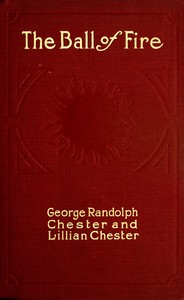
The Ball of Fire — Reading Companion
Young Readers Enchanted Adventures
105,547 recorded words. 66 minutes difference from this book's estimate.
View Gutenberg source #62653

The catalog record for Rich men's children — Inside the Classic provides practical reading context through 120,728 words, 8 hr 45 min estimated reading time, and 31 detected text sections.
The text analysis averages about 18.1 words per sentence, while the detected sections provide another way to judge how the source is divided.
Project Gutenberg metadata also associates the work with “Bigamy -- Fiction,” connecting these edition facts with the source record’s subject description.
Explore this collection
These alternatives are selected using recorded categories and estimated reading time.
About 459 minutes
Young Readers Enchanted Adventures
105,547 recorded words. 66 minutes difference from this book's estimate.
View Gutenberg source #62653About 451 minutes
Young Readers Enchanted Adventures
103,659 recorded words. 74 minutes difference from this book's estimate.
View Gutenberg source #63859About 408 minutes
Young Readers Enchanted Adventures
93,757 recorded words. 117 minutes difference from this book's estimate.
View Gutenberg source #59239Search stored excerpts and compare books → Choose by your preferences →
Choices use stored catalog measurements. Estimates vary with reading speed. A shared category is a catalog label, not a claim that two books have the same argument or literary quality.
Search reads excerpt text stored with this catalog and links to its associated Gutenberg record. The connection is stored in the site database; this tool does not recheck that every excerpt is word-for-word identical to that external record. Excerpt search does not cover every chapter and does not verify historical publication dates.
Catalog snapshot checked: 2026-09-25. Coverage: 92 public books, 92 available source excerpts.
Read the complete public-domain text at its original source.
Read on Project GutenbergThe opening chapter of Rich Men's Children establishes a landscape of cold and silence. The surrey's occupants are 'too cramped and stiffened' by the January night to speak, and the driver's earlier flow of conversation 'gradually languished and died.' This initial stillness is broken only by the brief, sheepish curiosity of onlookers at Chinese Gulch, who fix on the pale face and small white hand of the female passenger. Bonner's prose here is deliberate, using the physical environment—the 'spectral pallor' of the road, the blackness of ravines—to mirror the emotional distance between characters. The narrative voice is observational, withholding interiority, and the pace is slow, weighted by the cold that 'held the night.'
Bonner repeatedly uses silence to signal tension and unspoken conflict. In the opening pages, the three occupants of the surrey maintain 'an unbroken silence' for miles, broken only by the driver's earlier, dying conversation. Later, when Berny Ryan meets William G. Cannon, her initial response is guarded and silent: she 'pretended to read the name' on his card, delaying acknowledgment. The narrative voice notes that 'her instinct of dissimulation was strong,' and her gestures are described as having a 'histrionic origin,' suggesting performance rather than genuine ease. These silences are not empty; they are charged with the characters' calculations and fears. Bonner often follows a stretch of quiet dialogue with a shift to interior thought, as when Berny, after a pause, considers whether she likes Cannon 'so much.' The rhythm of the prose mirrors this: short, clipped sentences during tense exchanges, longer descriptive passages when the characters retreat into observation.
The dialogue in the excerpt reveals characters performing social roles. Cannon adopts a 'deep, friendly voice' and 'manner of cordial urbanity,' while Berny responds with a 'vague' politeness that she hopes is 'dignified and elegantly non-committal.' Their exchange is a dance of veiled intentions: Cannon's 'hard intelligence of the eyes' belies his jolly laugh, and Berny's 'large experience of men' keeps her on the defensive. Bonner's narrator often comments on these performances, noting that Berny's greeting 'suggested a histrionic origin' and that she 'pretended to read the name.' The narrative voice itself shifts between a detached, almost reportorial tone and a more intimate one that dips into characters' thoughts. For instance, when Cannon reminisces about the Ryans' humble past, Berny is 'much interested' and hopes he will continue, a detail that reveals her own social calculations. The prose is precise about gesture and tone, making the reader aware of what is left unsaid.
Bonner controls the pace by alternating between expansive description and tight, action-driven scenes. The opening journey is slow, with the landscape described in long, winding sentences: the road 'wound in spectral pallor over the shoulder of the foot-hill, now dipping into the blackness of a ravine, then creeping up a bare slope.' This languid rhythm contrasts with the quicker, more clipped exchanges inside the surrey. Later, when Cannon enters Berny's room, the pace shifts again: his movements are 'deliberate and full of design,' and the description of him backing toward a chair and 'subsiding into the seat' slows the moment, drawing attention to his physicality. Bonner uses small details—the 'knick-knacks of a near-by table,' the 'narrow chair' that is 'rather cramped for his large bulk'—to create a sense of spatial and temporal weight. These details ground the dialogue in a tangible world, preventing the conversation from becoming abstract. The result is a narrative that moves in fits and starts, mirroring the characters' own hesitations and bursts of candor.
Readers attentive to Bonner's handling of silence and gesture will find a novel that rewards close attention to what is withheld. The narrative voice is neither omniscient nor fully aligned with any one character; it moves between external observation and brief interior glimpses, creating a sense of distance that suits a story about secrets and social performance. The pacing, too, is uneven—long, descriptive passages give way to rapid exchanges—so that the reader, like the characters, must adjust to sudden shifts in tempo. This is not a story that rushes to reveal its hand.
That coldness in Rich Men’s Children—the way silence sits heavier than any argument—stays with you long after. I kept thinking how certain spaces hold secrets without ever telling them. The Flying Inn — Edition Insights has that same quiet weight, like rooms where voices echo strangely after everyone’s gone. It lingered with me the way some afternoons do, unhurried and strangely tender.
Save your reaction, strongest insight, and memorable passage.