About 170 minutes
Dead Shot; Or, The White Vulture: A Romance of the Yellowstone — Text and Context
Adventure Picaresque Fiction
39,048 recorded words. 4 minutes difference from this book's estimate.
View Gutenberg source #65527
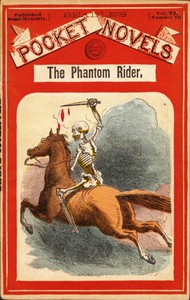
The Phantom Rider; or The Giant Chief's Fate: A tale of the old Dahcotah country — Edition Insights can be approached with a clearer sense of reading commitment from its source measurements: 38,053 words, 2 hr 46 min estimated reading time, and 5 detected text sections.
The text analysis averages about 17.4 words per sentence, while the detected sections provide another way to judge how the source is divided.
Project Gutenberg metadata also associates the work with “Indians of North America -- Fiction,” connecting these edition facts with the source record’s subject description.
Explore this collection
These alternatives are selected using recorded categories and estimated reading time.
About 170 minutes
Adventure Picaresque Fiction
39,048 recorded words. 4 minutes difference from this book's estimate.
View Gutenberg source #65527About 171 minutes
Adventure Picaresque Fiction
39,138 recorded words. 5 minutes difference from this book's estimate.
View Gutenberg source #65087About 172 minutes
Adventure Picaresque Fiction
39,404 recorded words. 6 minutes difference from this book's estimate.
View Gutenberg source #66085Search stored excerpts and compare books → Choose by your preferences →
Choices use stored catalog measurements. Estimates vary with reading speed. A shared category is a catalog label, not a claim that two books have the same argument or literary quality.
Search reads excerpt text stored with this catalog and links to its associated Gutenberg record. The connection is stored in the site database; this tool does not recheck that every excerpt is word-for-word identical to that external record. Excerpt search does not cover every chapter and does not verify historical publication dates.
Catalog snapshot checked: 2026-09-25. Coverage: 92 public books, 92 available source excerpts.
Read the complete public-domain text at its original source.
Read on Project GutenbergMaro O. Rolfe's The Phantom Rider; or The Giant Chief's Fate (1872) opens with a stark contrast between a cozy cabin interior and a howling November storm, establishing a pattern of rapid scene shifts that define the narrative's pace. The dual title itself signals a bifurcated plot: the first half focuses on the mysterious Phantom Rider, while the latter turns to the Giant Chief's backstory and downfall. Rolfe's narrator frequently interjects with exclamations like "The hand of Providence was in it!" and rhetorical questions such as "Would any thing baffle him now?" These devices heighten suspense and accelerate the tempo during action sequences, while descriptive passages slow the reading for domestic or reflective moments.
The novel's pacing relies on abrupt transitions from quiet, detailed scenes to frantic, life-or-death encounters. Chapter I devotes several paragraphs to Vinnie's appearance—her "shining masses of golden-brown hair" and "neatly-clad foot"—before a sudden intrusion of peril. Later, Ku-nan-gu-no-nah's attempted murder of Clancy Vere unfolds in a rapid sequence of failed shots, reloading, and a thrown pistol, each sentence accelerating the tension. Rolfe often follows a violent episode with a chapter break or a shift to a new setting, resetting the pace. For instance, after the cliffhanger of "Over the Precipice!" the next chapter begins with the Giant's story, a slower, explanatory passage. This alternation keeps the reader engaged but can feel disjointed when the narrative jumps between characters without transition.
Rolfe's narrator adopts a melodramatic tone, frequently breaking the fourth wall with exclamations like "Surely it had not touched his face" and rhetorical questions that imply the reader's shared astonishment. This voice controls pacing by pausing action for commentary—for example, after the pistol misfires, the narrator declares "The hand of Providence was in it!" before the chief reloads. Such interjections create a rhythm of action and reflection, though they sometimes undercut suspense by telegraphing outcomes. The narrator also withholds information, as when the Phantom Rider's identity remains unnamed for chapters, building mystery. This selective revelation, combined with chapter titles that hint at events ("Vinnie a Prisoner"), guides reader expectations and modulates the story's tempo.
The book's structure itself dictates pace. The dual title splits the narrative into two arcs: the Phantom Rider's appearances and the Giant Chief's fate. Chapter breaks often occur at moments of high tension—such as "Over the Precipice!"—forcing the reader to pause before resolution. Within chapters, Rolfe uses short paragraphs and dialogue to quicken pace during confrontations, while longer descriptive paragraphs slow it for setting or character introduction. The chapter "The Giant's Story" is a notable slowdown, offering backstory that explains earlier events. This structural variety means the novel does not maintain a consistent speed; instead, it alternates between breathless action and explanatory lulls, a hallmark of dime-novel serialization that rewards readers who enjoy episodic thrills.
Readers attentive to pace will notice how Rolfe manipulates sentence length and chapter endings to create a rhythm unique to this dime novel. The frequent shifts between interior and exterior scenes, and between characters' perspectives, demand flexibility from the reader. Approach the text as a series of linked vignettes rather than a continuous narrative, and observe how the narrator's interjections either heighten or deflate suspense. This editorial note is based solely on the excerpts provided; the full novel may reveal additional pacing strategies not evident here.
Sometimes a story stays because of what it won’t say—the phantom warrior’s silence in that old Dakota tale felt like a held breath. I found a similar ache in The skeleton scout; or, The border block — Story, Setting & Ideas, where the border itself seems to keep secrets. It’s a quiet weight, that knowing something terrible is coming, and reading it slowly felt almost like remembering.
Save your reaction, strongest insight, and memorable passage.









