About 592 minutes
The Wyvern mystery — A Closer Reading
Historical Psychological Social Fiction
135,953 recorded words. 19 minutes difference from this book's estimate.
View Gutenberg source #68569
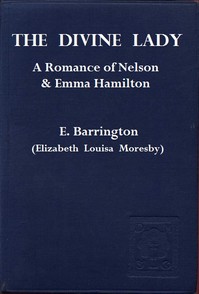
The Divine Lady: A Romance of Nelson and Emma Hamilton — Edition Insights can be approached with a clearer sense of reading commitment from its source measurements: 131,659 words, 9 hr 33 min estimated reading time, and 15 detected text sections.
The text analysis averages about 16.8 words per sentence, while the detected sections provide another way to judge how the source is divided.
Project Gutenberg metadata also associates the work with “Triangles (Interpersonal relations) -- Fiction,” connecting these edition facts with the source record’s subject description.
Explore this collection
These alternatives are selected using recorded categories and estimated reading time.
About 592 minutes
Historical Psychological Social Fiction
135,953 recorded words. 19 minutes difference from this book's estimate.
View Gutenberg source #68569About 535 minutes
Historical Psychological Social Fiction
122,959 recorded words. 38 minutes difference from this book's estimate.
View Gutenberg source #62902About 479 minutes
Historical Psychological Social Fiction
110,156 recorded words. 94 minutes difference from this book's estimate.
View Gutenberg source #59963Search stored excerpts and compare books → Choose by your preferences →
Choices use stored catalog measurements. Estimates vary with reading speed. A shared category is a catalog label, not a claim that two books have the same argument or literary quality.
Search reads excerpt text stored with this catalog and links to its associated Gutenberg record. The connection is stored in the site database; this tool does not recheck that every excerpt is word-for-word identical to that external record. Excerpt search does not cover every chapter and does not verify historical publication dates.
Catalog snapshot checked: 2026-09-25. Coverage: 92 public books, 92 available source excerpts.
Read the complete public-domain text at its original source.
Read on Project GutenbergThe novel opens with Emma Hart singing by a window, her voice drawing children on the green to listen—a scene that establishes her as a figure of natural, almost unconscious allure. The narrative quickly moves to the court of Naples, where Sir William Hamilton, the British ambassador, navigates political intrigue with Queen Marie Caroline. The Queen’s frank discussion of Hamilton’s liaison with Emma reveals a pragmatic calculus: she suggests that legalizing Emma’s position could serve both diplomatic ends and Hamilton’s reputation. This early exchange sets up a tension between personal desire and political necessity, a pattern that recurs throughout the excerpts.
Queen Marie Caroline’s conversation with Sir William Hamilton is a masterclass in indirect persuasion. She frames her interest in Emma’s status not as moral concern but as strategic necessity: “I have often most deeply and sincerely wished she could be the channel of communications with you.” The Queen’s language is carefully layered—she admits to protecting Hamilton’s interests while subtly warning that his liaison has created “difficulties” in England. Her offer to receive Emma as ambassadress is conditional on legalization, a move that would simultaneously secure a loyal ally and neutralize a potential scandal. The narrative notes that Hamilton “could appreciate its weight,” yet the reader sees the Queen’s self-interest: she fears a replacement ambassador less amenable to her ambitions. This scene exemplifies the novel’s interest in how personal relationships are leveraged for political gain.
The opening image of Emma singing—described as “carelessly glad, like a thrush alone in a leafy bower”—emphasizes her natural, unstudied charm. The narrative contrasts this with the calculated world of the Neapolitan court. Later, the Queen acknowledges Emma’s “qualities of head and disposition,” suggesting a capacity beyond mere beauty. The excerpts do not reveal Emma’s own perspective in these early scenes, leaving her interiority largely inferred. What is clear is that her voice and presence are central to her appeal: they draw both common listeners and powerful patrons. The novel’s title, The Divine Lady, echoes the nickname given by painter George Romney, whose portraits are referenced in the preface as the “best biographies” of Emma. The text thus positions Emma as an object of artistic and political fascination.
The Queen’s remark that Hamilton’s liaison has “made mischief” in high places underscores the novel’s attention to reputation as a tangible force. Hamilton’s internal response—imagining Queen Charlotte’s disapproval—shows how public perception constrains even powerful men. The narrative also highlights timing: the Queen speaks of “the days I see coming,” alluding to revolutionary upheaval. This urgency pressures Hamilton to act. The excerpts do not show his decision, but the tension is palpable. The preface, written from Nelson’s former flagship, frames the story as one of “love, cruelty and heroism,” suggesting that personal and historical forces are inseparable. The novel thus examines how private choices ripple through public events, with Emma at the center of both.
The excerpts offer a focused view of the novel’s early political and personal dynamics, centered on the Queen’s manipulation and Hamilton’s dilemma. Readers attentive to the interplay of voice, reputation, and timing will find a narrative that treats Emma’s rise as both a romantic and a strategic affair. The preface’s claim that without Emma’s inspiration “Trafalgar might not have been” signals the high stakes to come, though the excerpts do not yet reveal Nelson’s entry.
Reading about Emma’s restless climb made me think of evenings in my grandmother’s parlor, where I first met Boy: A Sketch — Story, Setting & Ideas. That book held a similar ache—a quiet longing for recognition, the way a person reshapes themselves for others. Strange how two different lives can echo one feeling, like a chord struck softly in a dark room, lingering long after the page turns.
Use these questions to collect your thoughts before moving on.









