About 158 minutes
Dusky Dick: or, Old Toby Castor's great campaign A story of the last Sioux outbreak — Edition Insights
Adventure Picaresque Fiction
36,310 recorded words. 0 minutes difference from this book's estimate.
View Gutenberg source #68699
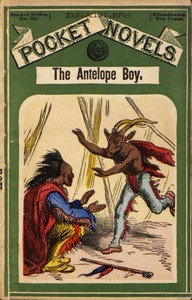
This digital edition of The Antelope Boy; or, Smoholler the Medicine Man A Tale of Indian Adventure and Mystery — A Closer Reading is described by source-level measurements including 36,247 words, 2 hr 38 min estimated reading time, and 6 detected text sections.
The text analysis averages about 12.9 words per sentence, while the detected sections provide another way to judge how the source is divided.
Project Gutenberg metadata also associates the work with “Indians of North America -- Fiction,” connecting these edition facts with the source record’s subject description.
Explore this collection
These alternatives are selected using recorded categories and estimated reading time.
About 158 minutes
Adventure Picaresque Fiction
36,310 recorded words. 0 minutes difference from this book's estimate.
View Gutenberg source #68699About 157 minutes
Adventure Picaresque Fiction
36,019 recorded words. 1 minutes difference from this book's estimate.
View Gutenberg source #64036About 159 minutes
Adventure Picaresque Fiction
36,503 recorded words. 1 minutes difference from this book's estimate.
View Gutenberg source #66231Search stored excerpts and compare books → Choose by your preferences →
Choices use stored catalog measurements. Estimates vary with reading speed. A shared category is a catalog label, not a claim that two books have the same argument or literary quality.
Search reads excerpt text stored with this catalog and links to its associated Gutenberg record. The connection is stored in the site database; this tool does not recheck that every excerpt is word-for-word identical to that external record. Excerpt search does not cover every chapter and does not verify historical publication dates.
Catalog snapshot checked: 2026-09-25. Coverage: 92 public books, 92 available source excerpts.
Read the complete public-domain text at its original source.
Read on Project GutenbergThe novel opens with a surveying party camped on the Columbia River near the Yakima confluence, a setting that immediately establishes a frontier of measurement and threat. The party includes two surveyors, a lieutenant, twelve soldiers, an old hunter, and two boy chain-bearers—first cousins both named Percy, though Percy Vere is slender and graceful while Percy Cute is dumpish and good-natured. This doubling of names and contrasting physiques hints at a structural pattern of paired characters and mirrored roles that recurs throughout the excerpts.
The camp is protected by a semicircular breastwork of felled trees and stones, running from the river around a grove and back again, with sentinels posted. The old hunter Gummery Glyndon approves, declaring Smoholler cannot drive them out. Yet the lieutenant is unaware of a cliff approach that could threaten the position. A council of war ensues: Glyndon proposes sending for Nez Perces warriors to fight the Yakimas, Umatillas, and Cayuses who side with Smoholler. The scene pivots when a young Nez Perces chief, Multuomah, rides across the river—a moment that shifts the focus from defensive geometry to diplomatic encounter.
Smoholler is introduced through rumor and report rather than direct appearance. Glyndon estimates his force at “nigh onto fifty” but fears he can muster three or four hundred warriors by setting other tribes against the surveyors. The medicine man’s power is political and supernatural: he is called a “Prophet-Chief,” and his influence extends beyond his own band. The novel’s title pairs him with the Antelope Boy, suggesting a dual focus on a human protagonist and a figure of occult authority. The excerpts do not reveal Smoholler’s motives or methods, but his name recurs as a source of tension that drives the party’s strategic decisions.
The two Percys are introduced with unusual specificity: Percy Vere has “a frank, honest face” and “courage and decision of character,” while Percy Cute is “decidedly dumpish” with a “grin” as his prevailing expression. They are chain-bearers, but the narrator notes they are “destined to play conspicuous parts.” This pairing echoes the novel’s broader interest in symmetry—two surveyors, two boys, two names—and may set up a contrast between competence and comic relief. The excerpts do not show them in action, but their introduction suggests they will be central to the plot’s movement between camp and wilderness.
The camp’s location is defined by the river as a natural barrier and the cliff as an overlooked vulnerability. Characters cross the river (Multuomah), watch it (sentinels), and discuss flanking maneuvers. The breastwork encloses the grove, but the cliff approach remains unknown to the lieutenant. This spatial tension—between defended interior and exposed perimeter—mirrors the narrative’s shifts from council to scouting, from camp to trail. The excerpts emphasize movement: Glyndon returns from scouting, Multuomah arrives from across the river, and the party considers sending for Nez Perces. The setting is not static but a node in a network of paths and threats.
Readers should attend to how the novel balances its two titular figures: the Antelope Boy, likely one of the Percy cousins, and Smoholler, the medicine man whose power is felt but not yet seen. The excerpts suggest a story that moves between fortified camps and open trails, with strategic councils and sudden arrivals. The dime-novel format promises rapid action, but the opening chapters invest in establishing a layered geography of risk and alliance.
I’ve shelved The Antelope Boy for years, and its lonely medicine man always lingers—how his tricks and truths blur on the river. That same quiet ache of wanting to be understood surfaces in Burgo's Romance — Key Ideas to Explore, where a man’s heart performs its own careful deceptions. They’re not alike in plot, but in that hushed space between pretending and believing, they whisper to each other.
Answer a few questions and save a private reflection on this device.









