About 152 minutes
Mad Anthony's scouts; or, The rangers of Kentucky — Inside the Classic
Adventure Picaresque Fiction
34,941 recorded words. 2 minutes difference from this book's estimate.
View Gutenberg source #68482
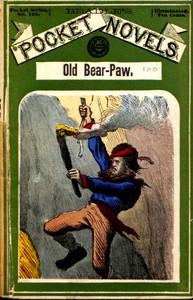
Old Bear-Paw, the trapper king; or, The love of a Blackfoot queen — Story, Setting & Ideas can be approached with a clearer sense of reading commitment from its source measurements: 35,244 words, 2 hr 34 min estimated reading time, and 4 detected text sections.
The text analysis averages about 17.1 words per sentence, while the detected sections provide another way to judge how the source is divided.
Project Gutenberg metadata also associates the work with “Adventure stories,” connecting these edition facts with the source record’s subject description.
Explore this collection
These alternatives are selected using recorded categories and estimated reading time.
About 152 minutes
Adventure Picaresque Fiction
34,941 recorded words. 2 minutes difference from this book's estimate.
View Gutenberg source #68482About 157 minutes
Adventure Picaresque Fiction
36,019 recorded words. 3 minutes difference from this book's estimate.
View Gutenberg source #64036About 151 minutes
Adventure Picaresque Fiction
34,722 recorded words. 3 minutes difference from this book's estimate.
View Gutenberg source #68601Search stored excerpts and compare books → Choose by your preferences →
Choices use stored catalog measurements. Estimates vary with reading speed. A shared category is a catalog label, not a claim that two books have the same argument or literary quality.
Search reads excerpt text stored with this catalog and links to its associated Gutenberg record. The connection is stored in the site database; this tool does not recheck that every excerpt is word-for-word identical to that external record. Excerpt search does not cover every chapter and does not verify historical publication dates.
Catalog snapshot checked: 2026-09-25. Coverage: 92 public books, 92 available source excerpts.
Read the complete public-domain text at its original source.
Read on Project GutenbergThe opening chapter of Old Bear-Paw, the trapper king; or, The love of a Blackfoot queen immediately establishes a distinctive narrative voice through the interplay of soliloquy and dialect. The scout Lew Kelly begins with an internal monologue—'I wonder what has become of that everlasting Yankee?'—before being interrupted by the very subject of his musings, Jehiel Filkins. This technique, blending thought and speech, sets a conversational tone that persists throughout the excerpts. The author, writing as Maj. Max Martine, relies heavily on colloquial markers: Filkins's 'Yew are 'tarnal right' and 'Wal, I ain't, then' signal a regional identity, while the narrative itself shifts between standard English and transcribed speech. The pace varies noticeably, from leisurely descriptive passages about gold and game to rapid-fire exchanges that propel the plot forward.
The excerpts showcase a deliberate use of dialect to distinguish characters. Jehiel Filkins speaks with a broad Yankee inflection—'Yew,' 'tarnal,' 'Wal'—while the titular Old Bear-Paw employs a different vernacular: 'Yas,' 'ther,' 'yer,' and 'fur.' These speech patterns are not merely decorative; they serve as shorthand for background and temperament. Filkins's dialect aligns him with the comic Yankee type common in dime novels, while Bear-Paw's rougher, more fragmented speech suggests a life isolated in the wilderness. The narrative voice itself, however, remains in standard English, creating a contrast between the narrator's omniscience and the characters' localized voices. This technique allows readers to infer social hierarchies and regional origins without explicit exposition.
The pacing in these excerpts alternates between static reflection and urgent action. Early passages dwell on setting—the Black Hills, the abundance of gold and game—with a leisurely rhythm that mimics the scouts' vacation-like mood. Dialogue proceeds in a back-and-forth that feels unhurried. However, once the party enters Bear-Paw's cave, the tempo accelerates sharply. The description of the chasm—'fearful,' 'inky blackness'—and the rope-swing crossing introduce physical danger. Commands like 'Ketch ther rope' and 'hurry up' compress time, while the characters' fears of treachery ('Could it be possible that the old man was about to leave them?') inject suspense. This shift from contemplative to kinetic is a hallmark of adventure fiction, but here it is executed through a sudden contraction of descriptive detail and an increase in imperative verbs.
The romantic exchange between Curtiss and Nulela introduces a third register into the narrative. Curtiss speaks in conventional sentimental phrases—'I love you'—while Nulela's dialogue is simpler and more direct: 'Nulela is not a child.' Their conversation, set against the backdrop of the chasm, momentarily slows the action again, creating a tonal contrast with the surrounding peril. The narrator's interjection—'a call from both Kelly and the old trapper to “hurry up” put a stop to their love-making'—underscores the tension between romantic and adventure impulses. This layering of voices—the scouts' colloquial banter, Bear-Paw's frontier drawl, and the lovers' earnestness—demonstrates the author's attempt to juggle multiple registers within a compact dime novel format.
Readers attentive to voice will notice how the author uses dialect not only for local color but also to manage pacing: the more heavily marked the speech, the more it slows the narrative, inviting readers to savor character rather than plot. The excerpts suggest that the novel's energy derives from this oscillation between the vernacular and the urgent, between the quotidian and the perilous. Pay attention to how Bear-Paw's speech patterns evolve—or remain static—as the story progresses, and whether the love subplot maintains its distinct register or merges with the adventure tone.
Years of shelving these old tales teach one that voices linger longest when they whisper. Old Bear-Paw’s lonely patience in the wilderness finds a quiet echo in Black'erchief Dick — Reading Companion, where a rogue’s rough soliloquies carry the same ache for a place to call home—two strangers, somehow kin.
Your answers remain private and are stored only in this browser.









