About 202 minutes
Siddhartha: A Poem of India — Reading Notes
Historical Psychological Social Fiction
46,414 recorded words. 10 minutes difference from this book's estimate.
View Gutenberg source #58344
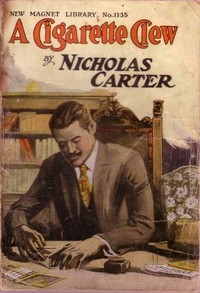
This digital edition of A Cigarette Clew; Or, "Salted" For a Million — Themes and Context is described by source-level measurements including 44,104 words, 3 hr 12 min estimated reading time, and 6 detected text sections.
The text analysis averages about 13.0 words per sentence, while the detected sections provide another way to judge how the source is divided.
Project Gutenberg metadata also associates the work with “Detective and mystery stories,” connecting these edition facts with the source record’s subject description.
Explore this collection
These alternatives are selected using recorded categories and estimated reading time.
About 202 minutes
Historical Psychological Social Fiction
46,414 recorded words. 10 minutes difference from this book's estimate.
View Gutenberg source #58344About 176 minutes
Historical Psychological Social Fiction
40,314 recorded words. 16 minutes difference from this book's estimate.
View Gutenberg source #64192About 218 minutes
Historical Psychological Social Fiction
50,073 recorded words. 26 minutes difference from this book's estimate.
View Gutenberg source #68033Search stored excerpts and compare books → Choose by your preferences →
Choices use stored catalog measurements. Estimates vary with reading speed. A shared category is a catalog label, not a claim that two books have the same argument or literary quality.
Search reads excerpt text stored with this catalog and links to its associated Gutenberg record. The connection is stored in the site database; this tool does not recheck that every excerpt is word-for-word identical to that external record. Excerpt search does not cover every chapter and does not verify historical publication dates.
Catalog snapshot checked: 2026-09-25. Coverage: 92 public books, 92 available source excerpts.
Read the complete public-domain text at its original source.
Read on Project GutenbergThe opening of A Cigarette Clew plunges into a bank robbery staged with theatrical precision. A watchman, drawn from his post by a feigned collapse, is sandbagged and gagged by a gang whose leader, Clancy, orchestrates the break-in with military timing. The excerpt shows no detective work yet—only the criminals' methodical disabling of an electric gong alarm and a time-clock vault. The catalog subjects list 'swindling' and 'mines,' but the text so far offers no mining or mineral fraud; the title's 'salted' likely refers to salting a mine, a classic swindle, but the robbery plot may be a prelude to that scheme. The cigarette clue itself remains absent from the provided pages.
The catalog subjects include 'Swindlers and swindling' and 'Mines and mineral resources,' yet the excerpted chapters describe a straightforward bank burglary. The gang uses a ruse—a well-dressed man pretending illness—to gain entry, then disables the alarm and ties up the watchman. There is no mention of salted mines, fake assays, or confidence tricks. The word 'salted' appears only in the title, suggesting the swindle may emerge later, but the provided text does not support the catalog's emphasis on mineral fraud. Readers expecting a mining scam will find a conventional heist instead, at least in the opening.
The excerpt reveals a carefully coordinated gang: Clancy directs operations, Spark handles the alarm, and lookouts named Cricket and Five Points watch the streets. The setting is a corner bank with offices above, a lamp-post, and an electrically connected gong—a specific period detail from early 20th-century urban security. The watchman's hesitation, torn between orders and compassion, adds a human touch to the mechanical plot. The dialogue is terse and functional ('Down! Here comes the other watchman'), typical of dime-novel pacing. The cigarette clue, promised by the title, has not yet appeared; the 'clew' may be a dropped cigarette or a brand, but the excerpt offers no hint.
The catalog subjects do not mention the gang's structure, the bank setting, or the use of a sandbag and gag. The 'Detective and mystery stories' tag fits, but the detective—presumably Nick Carter—has not entered the story. The excerpt is entirely from the criminals' perspective, showing their planning and execution. The catalog's 'Psychological & Social Fiction' category seems misplaced for this action-driven, plot-focused narrative. The text contains no interiority or social commentary; it is a procedural heist scene. The mismatch between catalog and content suggests the book may shift later, but the provided pages are pure crime procedural.
Readers should note that the catalog subjects may mislead: the opening is a bank robbery, not a mining swindle, and the detective has yet to appear. The cigarette clue remains a promise. Approach the text as a period heist story with a delayed reveal, and judge the catalog's accuracy only after reading further.
That rainy afternoon, the Nick Carter tale left me oddly restless—its staged heist felt more like a curious game than real crime. I set it aside, and my hand drifted to another shelf, pulling down Halfway House: A Comedy of Degrees — Background and Themes. Its quieter, bewildered characters seemed to answer something the dime novel had only hinted at.
Save your reaction, strongest insight, and memorable passage.









