About 192 minutes
A Cigarette Clew; Or, "Salted" For a Million — Themes and Context
Historical Psychological Social Fiction
44,104 recorded words. 16 minutes difference from this book's estimate.
View Gutenberg source #66700
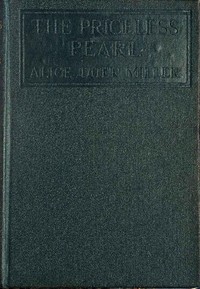
This digital edition of The Priceless Pearl — Reading Notes is described by source-level measurements including 40,314 words, 2 hr 56 min estimated reading time, and 4 detected text sections.
The text analysis averages about 17.2 words per sentence, while the detected sections provide another way to judge how the source is divided.
Project Gutenberg metadata also associates the work with “Young women -- Fiction,” connecting these edition facts with the source record’s subject description.
Explore this collection
These alternatives are selected using recorded categories and estimated reading time.
About 192 minutes
Historical Psychological Social Fiction
44,104 recorded words. 16 minutes difference from this book's estimate.
View Gutenberg source #66700About 202 minutes
Historical Psychological Social Fiction
46,414 recorded words. 26 minutes difference from this book's estimate.
View Gutenberg source #58344About 138 minutes
Historical Psychological Social Fiction
31,723 recorded words. 38 minutes difference from this book's estimate.
View Gutenberg source #66073Search stored excerpts and compare books → Choose by your preferences →
Choices use stored catalog measurements. Estimates vary with reading speed. A shared category is a catalog label, not a claim that two books have the same argument or literary quality.
Search reads excerpt text stored with this catalog and links to its associated Gutenberg record. The connection is stored in the site database; this tool does not recheck that every excerpt is word-for-word identical to that external record. Excerpt search does not cover every chapter and does not verify historical publication dates.
Catalog snapshot checked: 2026-09-25. Coverage: 92 public books, 92 available source excerpts.
Read the complete public-domain text at its original source.
Read on Project GutenbergThe novel begins not with its heroine but with a complaint: the office manager declares Pearl Leavitt “simply too good-looking” and a “disturbing element.” The president, a former botany professor, responds with a deaf man’s patient confusion, mistaking the weeping third vice president for the girl. This comic misdirection establishes a tone of ironic observation, where beauty is treated as a workplace hazard and male susceptibility as a managerial problem. The dialogue, with its formal circumlocutions (“the emotional outbreak which you have just described”), signals Miller’s satirical edge.
By the middle excerpt, Pearl has become a governess and is using letters to project an image of beauty. The narrative voice notes that her letters are “the letters of a beauty,” hinting at a deliberate performance. The later excerpt shifts to a domestic power struggle between sisters Dolly and Antonia, where Pearl observes their mother yielding to whichever child can inflict more pain. This triangulation of observation—Pearl watching, the reader watching Pearl—shapes the novel’s psychological texture.
The opening chapter introduces a workplace comedy of errors. Bunner, the office manager, blames Pearl’s appearance for causing trouble, while the president mishears and misinterprets. The dialogue is layered: Bunner regrets hiring her, yet admits she is “industrious, intelligent, punctual and well-mannered.” The president, eager to appear worldly, asks whether she encouraged the vice president, but Bunner can only say she said “good morning.” The humor lies in the gap between the men’s assumptions and the evidence. Miller uses their conversation to expose how male authority figures project their own anxieties onto a silent woman. The scene ends with them deciding to let her have her salary—a non-decision that leaves Pearl’s agency intact. This opening primes the reader to watch for how characters perceive Pearl versus how she acts.
In the middle excerpt, Pearl’s correspondence with a man named Durland becomes a tool for self-invention. The narrator observes that her letters are “the letters of a beauty,” though Durland has seen her and knows she is merely “nice-looking.” The text explicitly compares her to Clara Middleton from The Egoist, suggesting that Pearl’s writing conjures a beauty the reader must imagine. She prevents a photograph from being sent, preferring to control the image through words. The passage reveals her strategy: she does not dread discovery, seeing it as “nothing more than an awkward moment.” This confidence, and her plan to “have worked all the desired miracles” before his return, frames her deception as a game. The reader is left to wonder how long the mask can hold and what the “miracles” entail.
The later excerpt places Pearl as an observer of the Conway family’s internal war. Dolly and Antonia compete for a single spare room, and their mother must choose between them. Miller renders the conflict through sharp, behavioral detail: Dolly’s “flashing silence” is more effective than Antonia’s repeated protests. The mother’s decision is not based on justice but on which child can “inflict the most pain.” She knows Dolly’s hold on the young man Williams is fragile, yet she cannot bear to be the cause of losing him. The passage reveals a pattern of maternal capitulation that leaves both daughters angry. Pearl, watching, understands the dynamic: “trial by torture.” This scene establishes the household’s emotional economy, where love and resources are allocated through endurance tests, and sets the stage for Pearl’s own negotiations within the family.
Miller’s narrator rarely states a character’s feelings directly. Instead, she reports dialogue and gesture, letting the reader infer. The president’s deafness is never admitted; it is shown through his responses. Bunner’s misogyny is revealed in his belief that women are “omnipotent” despite his contempt. Pearl’s thoughts are given sparingly—we learn she does not dread discovery, but not why. This indirection extends to the plot: the novel’s title, The Priceless Pearl, may refer to the heroine or to something else entirely. The excerpts offer no clear villain or hero, only people acting on partial information. Readers should attend to what is left unsaid—the pauses, the mishearings, the letters that substitute for faces. The novel rewards close attention to its verbal surfaces, where power struggles are conducted through tone and timing.
As you read, note how Miller withholds direct access to Pearl’s interiority. The excerpts show her mostly through others’ reactions or through her own calculated actions. The office men, the correspondent Durland, and the Conway family each project their own version of her. The novel’s tension lies in whether Pearl’s self-presentation will hold, and what she truly wants. Pay attention to the letters—they may be the key to understanding her design.
Years ago, I shelved The Priceless Pearl beside a stranger, and they seemed to nod at one another—both knowing how easily a person can be misread. Pearl’s clever letters and the cigarette’s quiet clue share that same patient wink at assumptions. I still think of that shelf. A Cigarette Clew; Or, "Salted" For a Million — Themes and Context holds a similar heart.
Use these questions to collect your thoughts before moving on.









