About 33 minutes
The Hunter's Lodge Case — Story, Setting & Ideas
Historical Psychological Social Fiction
7,519 recorded words. 5 minutes difference from this book's estimate.
View Gutenberg source #67160
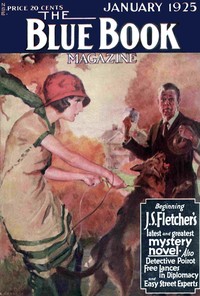
Before opening The Missing Will — Context and Discussion, the edition data offers a quick orientation: 6,356 words, 28 min estimated reading time, and 1 detected text section.
The text analysis averages about 16.9 words per sentence, while the detected sections provide another way to judge how the source is divided.
Project Gutenberg metadata also associates the work with “Short stories,” connecting these edition facts with the source record’s subject description.
Explore this collection
These alternatives are selected using recorded categories and estimated reading time.
About 33 minutes
Historical Psychological Social Fiction
7,519 recorded words. 5 minutes difference from this book's estimate.
View Gutenberg source #67160About 96 minutes
Historical Psychological Social Fiction
21,925 recorded words. 68 minutes difference from this book's estimate.
View Gutenberg source #61297About 138 minutes
Historical Psychological Social Fiction
31,723 recorded words. 110 minutes difference from this book's estimate.
View Gutenberg source #66073Search stored excerpts and compare books → Choose by your preferences →
Choices use stored catalog measurements. Estimates vary with reading speed. A shared category is a catalog label, not a claim that two books have the same argument or literary quality.
Search reads excerpt text stored with this catalog and links to its associated Gutenberg record. The connection is stored in the site database; this tool does not recheck that every excerpt is word-for-word identical to that external record. Excerpt search does not cover every chapter and does not verify historical publication dates.
Catalog snapshot checked: 2026-09-25. Coverage: 92 public books, 92 available source excerpts.
Read the complete public-domain text at its original source.
Read on Project GutenbergThe story opens with a brisk note from Miss Violet Marsh, a self-possessed young woman who immediately contrasts with the narrator Hastings's skepticism toward the "New Woman." Her account of her upbringing—a conflict between her uncle Andrew's belief in practical domesticity and her own drive for higher education—sets up a central tension that is not merely thematic but structural. The uncle's will, which she believes has been suppressed, becomes a puzzle that Poirot must solve, and the narrative moves between Marsh's detailed backstory and the methodical search of Crabtree Manor.
The search for the missing will is structured as a series of failed attempts. Poirot and Hastings first examine the study, finding a locked desk with a key tied to an envelope containing only a blank will-form. They then question the servants, who recall signing two will-forms, and search the house for a second document. Each step seems logical but leads nowhere. The climax comes when Poirot, after calling himself a "triple imbecile," returns to the envelope itself. He cuts it open, heats it over a fire, and reveals faint writing in a blend of disappearing and sympathetic ink. The will is literally hidden in the object that seemed most innocuous—the envelope tied to the key.
Throughout the story, keys and envelopes function as recurring motifs that guide the investigation. The uncle's desk key is prominently displayed, tied to an envelope that initially appears empty. Hastings notes that the envelope is "dirty" and unremarkable, yet it holds the crucial evidence. The act of unlocking—first the desk, then the envelope—mirrors the process of uncovering truth. Poirot's final gesture of "lighting the fire" to reveal the writing transforms a mundane object into a testament. These images reinforce the idea that the solution is hidden in plain sight, accessible only to those who look beyond surface appearances.
The narrative shifts between two settings: the urban office of Poirot, where Miss Marsh presents her case, and the rural Crabtree Manor, where the search unfolds. This movement reflects the story's central conflict between practical farm life and intellectual ambition. Marsh's description of her uncle's farm—with its modern experiments and old-fashioned values—contrasts with the orderly logic of Poirot's investigation. The will itself bridges these worlds: written with a chemical mixture, it requires both scientific knowledge (invisible ink) and domestic familiarity (the envelope) to decode. The resolution affirms that Marsh's education, which her uncle distrusted, ultimately enables her to hire the expert who finds the will.
Poirot's investigation follows a pattern familiar to readers of detective fiction: he interviews witnesses, examines physical evidence, and reconstructs the sequence of events. However, the story subverts expectations by making the solution depend on a chemical trick rather than psychological insight. The uncle's cleverness lies in anticipating that a searcher would focus on the will-forms, not the envelope. Poirot's self-deprecating remark—"I have been, not a triple imbecile, but thirty-six times one"—acknowledges that he initially fell into the trap. The final twist, where Hastings questions the fairness of the test, is countered by Poirot's assertion that Marsh proved her intelligence by "employing the expert." This ending leaves the reader to ponder whether the uncle's ruse was a genuine test or a cruel game.
Readers may find it useful to track the physical objects mentioned—keys, envelopes, will-forms—as they reappear in different contexts. The story's brevity (under 6,400 words) rewards close attention to detail, particularly the descriptions of the uncle's study and the servants' testimony. The narrative voice, filtered through Hastings, adds a layer of irony, as his initial dismissal of the "New Woman" contrasts with the story's eventual vindication of her choices.
That little Poirot story stayed with me—the way a hidden truth waits patiently inside an envelope. It reminded me of reading The Great Gatsby — Text and Context later, how Gatsby’s whole life felt like invisible ink, only surfacing when someone finally held the page to light. A quiet ache, both times. I still think about that.
Save your reaction, strongest insight, and memorable passage.









