About 223 minutes
The Transformation of Philip Jettan — A Reader’s Guide
Historical Psychological Social Fiction
51,238 recorded words. 8 minutes difference from this book's estimate.
View Gutenberg source #60776
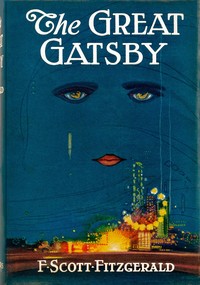
The catalog record for The Great Gatsby — Text and Context provides practical reading context through 53,083 words, 3 hr 51 min estimated reading time, and 6 detected text sections.
The text analysis averages about 15.4 words per sentence, while the detected sections provide another way to judge how the source is divided.
Project Gutenberg metadata also associates the work with “Psychological fiction,” connecting these edition facts with the source record’s subject description.
Explore this collection
These alternatives are selected using recorded categories and estimated reading time.
About 223 minutes
Historical Psychological Social Fiction
51,238 recorded words. 8 minutes difference from this book's estimate.
View Gutenberg source #60776About 218 minutes
Historical Psychological Social Fiction
50,073 recorded words. 13 minutes difference from this book's estimate.
View Gutenberg source #68033About 202 minutes
Historical Psychological Social Fiction
46,414 recorded words. 29 minutes difference from this book's estimate.
View Gutenberg source #58344Search stored excerpts and compare books → Choose by your preferences →
Choices use stored catalog measurements. Estimates vary with reading speed. A shared category is a catalog label, not a claim that two books have the same argument or literary quality.
Search reads excerpt text stored with this catalog and links to its associated Gutenberg record. The connection is stored in the site database; this tool does not recheck that every excerpt is word-for-word identical to that external record. Excerpt search does not cover every chapter and does not verify historical publication dates.
Catalog snapshot checked: 2026-09-25. Coverage: 92 public books, 92 available source excerpts.
Read the complete public-domain text at its original source.
Read on Project GutenbergFrom the first page, Nick Carraway establishes a voice of deliberate restraint. He reports his father's advice—'just remember that all the people in this world haven't had the advantages that you've had'—and immediately undercuts it by admitting he is 'inclined to reserve all judgements' yet has been 'unjustly accused of being a politician.' This tension between claimed tolerance and actual judgment runs through the narrative. Nick presents himself as a reluctant confidant, feigning 'sleep, preoccupation, or a hostile levity' to avoid intimate revelations. Yet he also confesses that 'reserving judgements is a matter of infinite hope.' The opening establishes a narrator who is both insider and outsider, setting the stage for a story filtered through a consciousness that is acutely aware of its own biases.
Nick's narration is not neutral; it is a performance of objectivity. He boasts of his tolerance but admits its limit: 'Conduct may be founded on the hard rock or the wet marshes, but after a certain point I don't care what it's founded on.' This self-aware contradiction shapes how Gatsby is presented. Nick calls Gatsby 'the man who gives his name to this book' and claims he is 'exempt from my reaction,' yet he also says Gatsby 'represented everything for which I have an unaffected scorn.' The reader must weigh Nick's judgments against the evidence he provides. For instance, he describes Gatsby's 'extraordinary gift for hope' but also notes 'what foul dust floated in the wake of his dreams.' The narrative is a filter, and the gaps in Nick's knowledge—or his willingness to share it—create a deliberate ambiguity.
Fitzgerald builds meaning through small, precise details. When Gatsby reunites with Daisy, he lights her cigarette 'from a trembling match'—a physical tremor that betrays his composure. The setting is carefully controlled: Gatsby flips a switch, the 'grey windows disappeared,' and he turns on 'a solitary lamp' in the music-room. The scene is staged, yet the narrator observes that Gatsby's face shows 'the expression of bewilderment' and 'a faint doubt' about 'the quality of his present happiness.' Klipspringer's piano playing—'The Love Nest' and 'Ain't we got fun'—provides an ironic soundtrack. The lyrics 'The rich get richer and the poor get—children' underscore class tensions. These details are not decorative; they carry the emotional weight of the scene, revealing the fragility of Gatsby's constructed reality.
The novel explicitly shows Gatsby as a self-made identity. The narrator reveals that 'James Gatz of North Dakota' changed his name 'at the age of seventeen and at the specific moment that witnessed the beginning of his career—when he saw Dan Cody's yacht drop anchor.' The transformation is tied to a single, almost mythic moment. Later, a reporter arrives seeking 'any statement to give out,' and Gatsby's notoriety is fed by 'hundreds who had accepted his hospitality and so become authorities upon his past.' Rumors circulate—an 'underground pipeline to Canada,' a house that is actually a boat. These inventions are 'a source of satisfaction' to Gatsby, but the narrator does not fully explain why. The text presents Gatsby as a figure whose identity is both fabricated and fiercely believed in, leaving the reader to question where the performance ends and the person begins.
Reading The Great Gatsby requires attention to what is not said. Nick's narrative is full of qualifications and withheld judgments. Pay close attention to moments of silence, physical gestures, and the objects that populate scenes—a trembling match, a solitary lamp, a piano playing an ironic tune. These details often reveal more than the narrator's explicit statements. The novel rewards a careful, skeptical reading that questions the reliability of its own voice.
I finished The Great Gatsby — Text and Context and kept thinking about Nick’s quiet watching, all that hope held inside a trembling match or a torn green jersey. It made me recall The Hunter's Lodge Case — Story, Setting & Ideas — that same feeling of something important resting just beneath what anyone says aloud. Both stayed with me in that soft, unresolved way.
Capture what you thought, learned, and would like to remember.









