
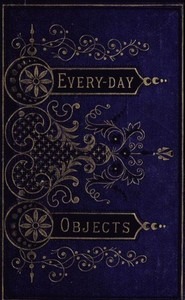
Everyday Objects; Or, Picturesque Aspects of Natural History. by Adams
This isn't a novel with a plot in the traditional sense. Instead, think of it as a series of short, fascinating detective stories where the clues are all around us.
The Story
The book has no single narrative. Each chapter picks a common object—a lump of chalk, a grain of wheat, a honeycomb—and investigates it. Adams acts as your guide, explaining where it comes from, how it's formed, and its place in the natural world. He connects a seashell to ancient oceans, a piece of granite to volcanic fire, and a moth's wing to principles of color and light. The 'story' is the hidden journey each object has taken to end up in your hand.
Why You Should Read It
I loved how this book made me stop and look. It turns a simple walk into an adventure. Adams writes with genuine excitement, like a friend pointing out something cool you almost missed. The science is explained clearly, without jargon, focusing on the sense of awe. It’s a powerful reminder that knowledge doesn't make the world less magical; it makes it more so. Reading it feels like getting a superpower: the ability to find fascination anywhere.
Final Verdict
Perfect for curious minds, nature lovers, and anyone who enjoys podcasts or articles that explain 'the hidden world of...' things. It's a calming, enriching read for when you want to learn something wonderful but don't want a heavy academic tone. If you liked the vibe of modern naturalist writers like Robin Wall Kimmerer or Robert Macfarlane, you'll find a kindred spirit in this charming Victorian book.
This masterpiece is free from copyright limitations. Feel free to use it for personal or commercial purposes.
Margaret Wright
4 months agoThe index links actually work, which is rare!
Oliver Perez
1 year agoSurprisingly enough, the pacing is just right, keeping you engaged. Exactly what I needed.




Aiden Martinez
1 month agoWow.