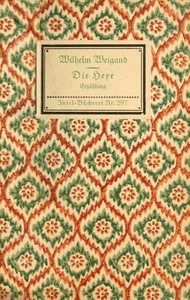
Die Hexe: Eine Erzählung by Wilhelm Weigand
Let's talk about a book that quietly crawled under my skin. 'Die Hexe' (The Witch) by Wilhelm Weigand is a short but powerful story set in a 19th-century German village. It’s a snapshot of suspicion, not a grand fantasy epic.
The Story
The plot follows a young woman, often an outsider, living on the edges of her community. When misfortune strikes the village—a spoiled harvest, a sick child—old fears surface. Whispers start. People look for someone to blame, and their gaze settles on her. Her odd habits, her solitary life, her mere difference become 'proof.' We watch as gossip hardens into conviction, and a normal person is transformed, by her neighbors' fear, into the thing they dread most.
Why You Should Read It
What got me was the chilling realism. Weigand shows how a witch is made, not born. The real horror isn't supernatural; it's the collective decision to turn on one of your own. The writing is sharp and atmospheric, pulling you into the cramped, judgmental world of the village. You feel the isolation of the accused and the creeping panic of the crowd. It’s a masterclass in building tension through everyday cruelty.
Final Verdict
This is a must-read for anyone interested in the darker corners of human psychology and social history. It’s perfect for fans of quiet, character-driven stories that explore how fear spreads. If you enjoyed the tense atmosphere of Shirley Jackson's 'The Lottery' or the moral questions in Arthur Miller's 'The Crucible,' you’ll find a compelling ancestor here. Just be prepared to look at your own community a little differently afterward.
This book is widely considered to be in the public domain. You do not need permission to reproduce this work.