
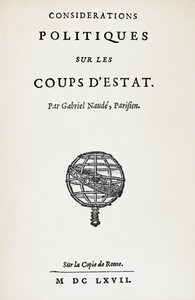
Considerations politiques sur les coups d'estat by Gabriel Naudé
This isn't a novel or a traditional history. 'Considerations politiques sur les coups d'estat' is a manual. Written in 1639, it’s Gabriel Naudé’s clear-eyed analysis of the most extreme tool in a ruler’s kit: the coup d'état. He strips away the moralizing and looks at these violent power grabs as a political surgeon would. He asks: What are the different types? When are they justified (hint: he argues for 'reason of state' over traditional morality)? What are the practical steps to pull one off successfully, from secrecy and speed to managing the aftermath? Naudé uses examples from ancient Rome to his own time, treating these earth-shattering events as calculated operations.
Why You Should Read It
Reading Naudé is a bracing experience. You won't find heroes here, just pragmatism. His central idea—that a leader might have to commit a 'great crime' to prevent a greater disaster for the public—feels chillingly relevant. It forces you to think about the messy, often ugly, compromises of governance. This book pulls back the curtain on the raw mechanics of power in a way that feels more honest than a lot of modern political theory. It’s a stark reminder that the rules we live by are often written by those who first broke the old ones.
Final Verdict
Perfect for readers fascinated by realpolitik, Machiavelli fans looking for a next-level read, or anyone who enjoys historical deep dives that challenge modern sensibilities. It’s not a light read, but it’s a short and powerfully concentrated one. If you've ever watched a political thriller and thought, 'But what would actually work?'—Naudé has the 400-year-old answers.
There are no legal restrictions on this material. Share knowledge freely with the world.








Mary Anderson
8 months agoI came across this while browsing and the atmosphere created is totally immersive. One of the best books I've read this year.